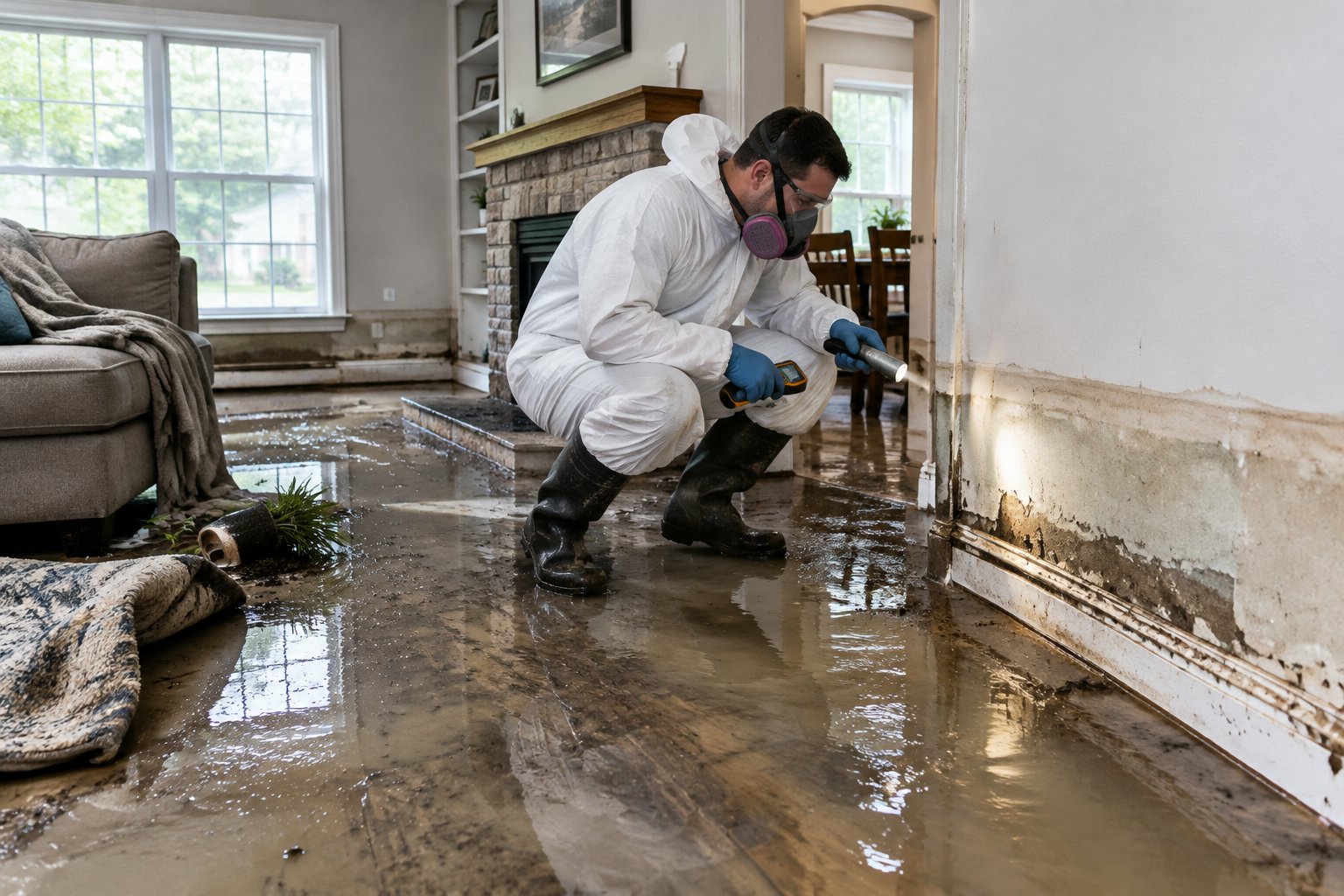
Category 3 water damage is the most serious of the three water categories restoration professionals use. It means the water is grossly contaminated, usually from sewage or outdoor flooding, and can carry bacteria and other harmful agents. Porous materials it soaks, such as drywall, carpet and insulation, almost always have to be removed rather than dried and saved.
The category is about where the water came from, not how it looks. Clear water from a sewer backup is still black water. In Southern Maryland, heavy rain from tropical storm remnants and nor'easters is the usual trigger, pushing water into low-lying basements or backing up drains in older homes.
The IICRC's position statement on weather-related losses describes Category 3 water as grossly contaminated and able to contain pathogenic, toxigenic or other harmful agents. Its examples include sewage, flooding from seawater, rising water from rivers or streams, and wasteline backflows that originate beyond any trap regardless of visible content or color. That last point is the one that surprises people: water that looks clean can still be Category 3.
Water Gets Worse the Longer It Sits
A water category is not fixed at the moment of the leak. The IICRC notes that time and temperature can change the level of contamination, which is why a clean water leak left sitting in a warm, humid basement can deteriorate over the following days. There is no single hour when this happens, which is one more reason to deal with any water loss promptly.
For Southern Maryland homes, summer humidity speeds that process up. A slow-draining basement after a July storm is a different situation from the same water in January.
Why Porous Materials Usually Come Out
Drywall, carpet and pad, insulation, particleboard cabinets and upholstered furniture soak up contaminated water deep into their fibers, where cleaning products cannot reach it. Drying them leaves the contamination behind. The CDC's flood cleanup guidance is direct about it: throw away items that cannot be disinfected, such as wall coverings, cloth, rugs and drywall.
Hard, non-porous surfaces are a different story. Concrete, tile, metal and solid wood framing are often cleaned and disinfected in place, then dried and checked with a moisture meter before anything is closed back up. Framing that is rotted or badly swollen is replaced.
For a finished basement, that usually means wall finishes and drywall are cut out above the water line, flooring comes up, and insulation in the affected cavities goes. It sounds drastic, but rebuilding on clean, dry framing is the only way to avoid odors and hidden problems later. Our basement water damage recovery guide shows how that rebuild comes together.
Keep Your Family Safe Before Anyone Starts Cleanup
The CDC notes that floodwater may contain sewage and that exposure can cause wound infections, skin rashes and gastrointestinal illness. Open cuts are a particular concern, and children should not play in or near floodwater.
Until a professional crew takes over:
- Keep children and pets out of affected rooms
- Do not walk through the water, and never reach for a switch or outlet in a wet room
- Shut off power to the area only if you can reach the panel from a dry spot; otherwise call your utility or an electrician
- Wash with soap and clean water right away if you touch the water, and keep any cut covered
- Take photos and video from doorways or stairs for your insurer, without stepping in
Skip the shop vacuum, mop and box fan. They spread contaminated water and droplets into clean parts of the house.
Contaminated Water Is a Job for Professionals
Category 3 cleanup calls for protective equipment, containment and disinfection that homeowners do not have on hand, and mistakes can spread contamination or trap it inside new walls. This is not the time for DIY.
Once the contaminated material is out and the space is safe, Jenkins Restoration & Remodel takes over the restoration of water-damaged rooms, replacing what had to be removed and putting each room back together properly. We also work with your insurance company on the claim, keeping photos and records organized so your adjuster can see why each step was needed. If you are comparing companies, this checklist of what to expect from a water damage restoration company shows what separates careful crews from rushed ones.
The Insurance Side in Brief
How a Category 3 loss is covered depends on the source. Outside floodwater is generally excluded from standard homeowners policies and falls under a separate flood policy. A sewer or drain backup usually requires a water backup endorsement. A sudden discharge from your own plumbing, like a toilet supply line or a burst pipe, may be handled under your homeowners policy even if the water became contaminated. Every policy is written differently, and your adjuster will look at the cause first, so tell them exactly where the water came from and when you found it.
Rebuilding Safely After Contaminated Water
Jenkins Restoration & Remodel restores and rebuilds homes after serious water damage throughout Prince George's, Anne Arundel, Charles, Calvert and St. Mary's Counties. We replace damaged drywall, flooring and finishes once the space is clean and dry, and we handle the insurance side alongside you so you are not chasing paperwork during a hard week. You will know what comes next at every stage. Call (301) 884-6180 or request a free restoration estimate.
Frequently Asked Questions
Can a toilet overflow be Category 3?
It depends on the source. An overflow of water from the bowl with only urine is usually treated as Category 2, but a backflow that originates beyond the toilet trap, or any overflow containing feces, is treated as Category 3. If you are unsure which happened, assume the worse case and keep everyone away from the water.
Does a sump pump overflow count as Category 3?
Not automatically. Groundwater from a sump pit is often treated as Category 2, but if it has mixed with sewage or outdoor floodwater, or sat long enough to deteriorate, it can be Category 3. Note where the water entered and whether it smelled of sewage, since that helps both the crew and your adjuster.
Do I need to throw away all my belongings?
Not everything. Hard items like metal, glass and some plastics can often be cleaned and disinfected. Soft items that soaked up the water, such as mattresses, upholstered furniture, rugs and stuffed toys, usually cannot be made safe and are discarded. Photograph items before they go for your insurance claim.
Is it safe to stay in the house during Category 3 cleanup?
If the damage is limited to a closed-off basement or one area and the rest of the home is unaffected, some families stay. If kitchens, bathrooms or bedrooms are involved, or anyone in the home is very young, elderly or has a weakened immune system, staying elsewhere is the safer choice. Ask your insurer whether your policy helps with temporary living costs.
How do I know the area is safe to rebuild?
Rebuilding should start only after contaminated materials are removed, surfaces are cleaned and disinfected, and moisture readings confirm the framing and subfloor are dry. Ask for those readings in writing. Closing walls over damp or uncleaned framing is the most common cause of lingering odor and mold.