.png)


Standing outside your home after a fire, watching smoke still curl from a window, is a moment no homeowner forgets. Your mind races with questions. Can you go back inside? What happens next? Who decides what gets fixed and what gets replaced?
If you are searching for answers about what to expect during a fire damage home assessment, you are already doing the right thing. Knowing what happens in the hours and days after a fire, and who will walk through your home, can bring a measure of calm to one of the hardest moments a homeowner faces.
Southern Maryland families have leaned on local contractors with decades of hands-on experience for exactly this kind of guidance, especially when insurance paperwork piles up alongside the physical damage.
Keep reading to learn what happens in the first 48 hours, who typically shows up to inspect your home, what they look for, and how their findings connect directly to your insurance claim. You are in the right place, and clarity is closer than it feels right now.
The First 48 Hours After a House Fire
The first two days after a fire set the tone for your entire recovery, and the choices you make now protect both your safety and your claim. Acting within this window matters: the EPA's guidance on mold and moisture notes that mold can begin growing on wet surfaces within 24 to 48 hours, which is part of why drying and stabilizing a fire-damaged home quickly limits secondary staining, mold, and structural decline.
Everything you do right now should support two goals: staying safe and preserving evidence of the damage.
Wait for Official Clearance Before Going Inside
Do not enter your home until the fire department or a building official says it is safe. Structural elements can look stable but hide serious weakness from heat exposure, and floors or ceilings can give way without warning.
Once cleared, move carefully. Wear closed-toe shoes, avoid touching soot-covered surfaces with bare hands, and keep children and pets away until a professional assessment confirms the home is livable.
Secure the Property and Prevent Further Damage
Boarding up broken windows and tarping damaged roof sections keeps rain, animals, and looters out while you wait for a full assessment. Many restoration companies offer emergency board-up service as a first step before any formal inspection begins.
- Cover broken windows and door openings with plywood
- Tarp any exposed roof sections
- Shut off utilities if instructed by the fire department
- Avoid running electrical systems until they are checked
What to Document Before Cleanup Begins
Photograph and video every room before you move or clean anything, since this record becomes the foundation of your insurance claim. Walk through slowly, capturing wide shots of each room along with close-ups of specific damage.
Write down the date, time, and a short description of what you see while it is fresh. This habit matters just as much for a Hughesville rowhouse as it does for a larger home in Prince George's County, since every claim benefits from a clear timeline.
The property is secure, and your documentation has started. Now comes the question of who actually walks through your home to assess what happened.
Who May Be Involved in the Assessment
More than one professional may visit your home in the days following a fire, and each one plays a different role in the process. Understanding who does what helps you know whose opinion carries weight on which decisions.
What a Restoration Contractor Evaluates
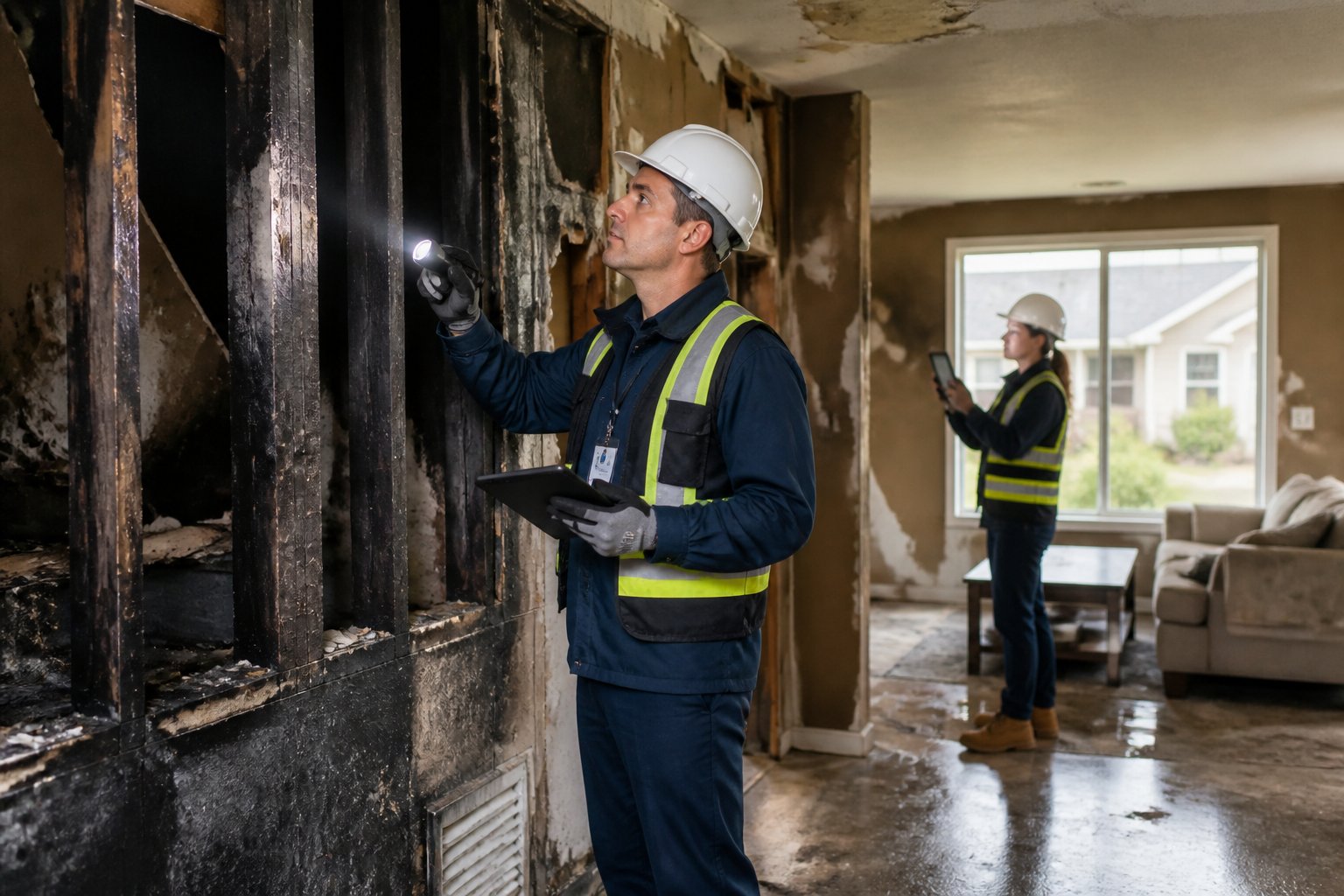
A restoration contractor evaluates the full scope of damage, including structural conditions, smoke penetration, and water intrusion from firefighting efforts. This is often the first professional visit after the fire department clears the property, and it typically happens within the first day or two.
The contractor walks every room, checks attic and crawl space access points, and notes which materials are salvageable versus which need replacement. This visit forms the basis of a written scope of work that later supports your insurance claim.
When a Structural Engineer May Be Needed
A structural engineer gets involved when a contractor suspects the fire compromised load-bearing walls, roof framing, or the foundation. This step matters most in homes where the fire burned for an extended period or reached upper floors and attic spaces.
Engineers issue a written opinion on whether framing members need replacement or can be reinforced. Skipping this step on a structurally questionable home creates risk for anyone who later occupies the space.
What the Insurance Adjuster Does and Does Not Decide
An insurance adjuster documents damage and determines what your policy covers, but does not decide the actual repair methods or materials used. The adjuster's job is to translate observed damage into a dollar figure based on your policy language.
- Adjusters typically photograph damage and take their own notes
- They review your policy limits and exclusions
- They do not make final calls on construction methods or code requirements
- They rely heavily on contractor estimates and scopes of work
Knowing who does what sets the stage for understanding exactly what each of these professionals is looking for once they start walking through your rooms.
What Inspectors Check Throughout the Home
Inspectors look far beyond the room where the fire started, since fire damage spreads through a home in ways that are not always visible right away. A thorough assessment covers four main categories of concern.
Structural Damage From Heat and Flames
Heat weakens wood framing, warps metal connectors, and can compromise the integrity of walls and ceilings even where flames never touched. Inspectors check load-bearing walls, floor joists, and roof trusses for charring, warping, or brittleness.
Homes with additions or older construction, common throughout Southern Maryland, sometimes reveal mismatched framing methods that complicate a full structural read. This is one reason a second opinion from a structural engineer matters in more severe cases.
Smoke and Soot Beyond the Burned Room
Smoke travels through HVAC ducts, wall cavities, and attic spaces, coating surfaces far from the fire's origin. Inspectors check adjoining rooms, closets, and even upper floors for soot residue and lingering odor.
- Ductwork and vents throughout the home
- Insulation in attics and wall cavities
- Fabric surfaces like carpet, drapes, and upholstery
- Cabinetry and porous wood surfaces
Water Damage From Firefighting Efforts
Firefighting water often causes more widespread damage than the flames themselves, soaking flooring, drywall, and insulation throughout the structure. Inspectors check moisture levels in walls and subfloors, since trapped water leads to mold within 24 to 48 hours if left untreated.
This water damage needs its own line item in your assessment report, separate from fire and smoke damage. Insurers sometimes underestimate how far water travels through a structure, which is why a detailed contractor walkthrough matters.
Electrical, Gas, and HVAC Safety Concerns
Electrical wiring exposed to heat can develop hidden shorts, and gas lines near the fire's origin need pressure testing before anyone turns them back on. Inspectors check breaker panels, outlets, and any gas appliances located near the affected area.
HVAC systems that pulled smoke through their ducts during the fire need cleaning or replacement before they can run safely again. An inspector flags these systems for a specialist review rather than approving them for immediate use.
Every finding from this walkthrough becomes part of a written record, and that record is what turns a stressful inspection into real leverage for your insurance claim.
How Assessment Findings Support Your Insurance Claim
A detailed assessment report gives your insurance claim the evidence it needs to move forward without unnecessary delays or disputes. Insurers rely on documentation, not memory, so the strength of your paperwork often determines how smoothly your claim proceeds. This assessment is the first step of Jenkins Restoration and Remodel's full fire damage restoration process, which carries these findings forward from documentation through the final rebuild.
Photos, Notes, and a Room-by-Room Damage Record
A room-by-room record with photos, written notes, and dated entries creates a clear timeline an adjuster can follow without guesswork. This record should note the condition of walls, flooring, ceilings, and personal belongings in every affected space.
Keep a running list rather than relying on scattered photos on your phone. A simple folder, digital or physical, organized by room, saves time when your adjuster asks for specifics weeks into the process.
Why Hidden Damage Should Be Included in the Scope
Damage that is not visible on the surface, like smoke residue inside ductwork or moisture trapped in subfloors, needs to be part of the written scope from the start. Leaving it out risks a settlement that does not cover the full cost of proper restoration.
A contractor who understands both restoration and insurance claims can identify these hidden issues during the initial walkthrough, before drywall or flooring covers them up again. This is where working with a team experienced in insurance claims support alongside the physical repair work makes a real difference for Southern Maryland homeowners.
What to Save for Your Claim File
Keep every document tied to your fire loss in one place, since insurers often ask for the same information more than once.
- Photos and video from the first 48 hours
- Written contractor assessment reports
- Receipts for temporary repairs or emergency board-up work
- Copies of all correspondence with your insurance company
- A written inventory of damaged personal belongings with estimated value
With your documentation organized, the next step is preparing for the actual walkthrough, so you know what to ask and what to expect when someone arrives at your door.
How Homeowners Can Prepare for the Visit
Preparing for the assessment visit means having your questions ready and understanding what should happen during the walkthrough itself. A few minutes of preparation can prevent confusion later.
Questions to Ask During the Walk-Through
Ask direct questions so you understand the reasoning behind each finding, not just the conclusion.
- What areas show structural damage, and how severe is it?
- Which materials can be cleaned versus which need full replacement?
- Is there evidence of water damage from firefighting efforts?
- Will you share this scope of work directly with my insurance adjuster?
- What temporary repairs are needed before rebuilding can start?
Why You Should Not Remove Damaged Belongings Too Soon
Moving or discarding damaged items before they are documented can weaken your insurance claim, since the adjuster may need to see their actual condition. Wait until your contractor or adjuster confirms an item has been fully documented before removing it from the property.
Set aside a separate area for damaged belongings you plan to keep for now. Label items with notes on their condition and estimated value while the details are still clear in your mind.
How the Assessment Leads to a Restoration Plan
Once the assessment is complete, the findings translate directly into a written restoration plan that outlines the order of repairs and the materials needed. This plan becomes the roadmap your contractor follows from demolition through final rebuild.
A clear plan also gives your insurance adjuster something concrete to review, which tends to speed up claim approval compared to vague damage descriptions. At this stage, many Southern Maryland homeowners start scheduling the actual restoration work based on what the assessment revealed.
Frequently Asked Questions
How soon should a fire damage assessment happen after a house fire?
An assessment should happen as soon as the fire department clears your home for entry, ideally within the first 24 to 48 hours. Waiting longer allows smoke residue, moisture, and structural weaknesses to worsen, which can increase repair costs and complicate your insurance claim.
Can I enter my home before the fire damage assessment?
You should not enter your home until fire officials or a building inspector confirms it is safe. Heat-damaged framing and hidden structural weaknesses can create serious hazards that are not visible from the outside.
What do inspectors look for after a house fire?
Inspectors check structural framing, smoke and soot spread throughout the home, water damage from firefighting efforts, and the safety of electrical, gas, and HVAC systems. They document every finding in a written report that supports both the restoration plan and your insurance claim.
Does fire department water damage need to be included in the assessment?
Yes, water used to extinguish the fire often causes damage that spreads well beyond the burned area and needs its own place in the assessment report. Left unaddressed, this moisture can lead to mold growth within a day or two.
How long does a fire damage home assessment usually take?
Most assessments take a few hours to complete, though the exact time depends on the home's size and the extent of the damage. Homes requiring a structural engineer's review may need a follow-up visit before the assessment is considered complete.
Will the assessment help with my insurance claim?
Yes, a detailed written assessment gives your insurance adjuster the documentation needed to process your claim accurately and efficiently. Without it, claims often face delays or disputes over what damage is actually covered.
A Clear Assessment Creates a Safer Path Forward
A thorough fire damage assessment turns an overwhelming situation into clear, manageable steps. Once you know what is damaged, what is salvageable, and what your policy covers, the path to rebuilding becomes far less uncertain.
A careful assessment goes beyond the insurance paperwork. It protects your family's safety by catching structural weaknesses, electrical hazards, and hidden moisture before they cause further harm.
Every home and every fire is different, so no two assessments look exactly alike. What stays consistent is the need for careful documentation, clear communication with your insurer, and a contractor who treats your home with the same care you would.
Call Jenkins Restoration and Remodel today to schedule a fire damage assessment and get a clear, documented starting point for your recovery.