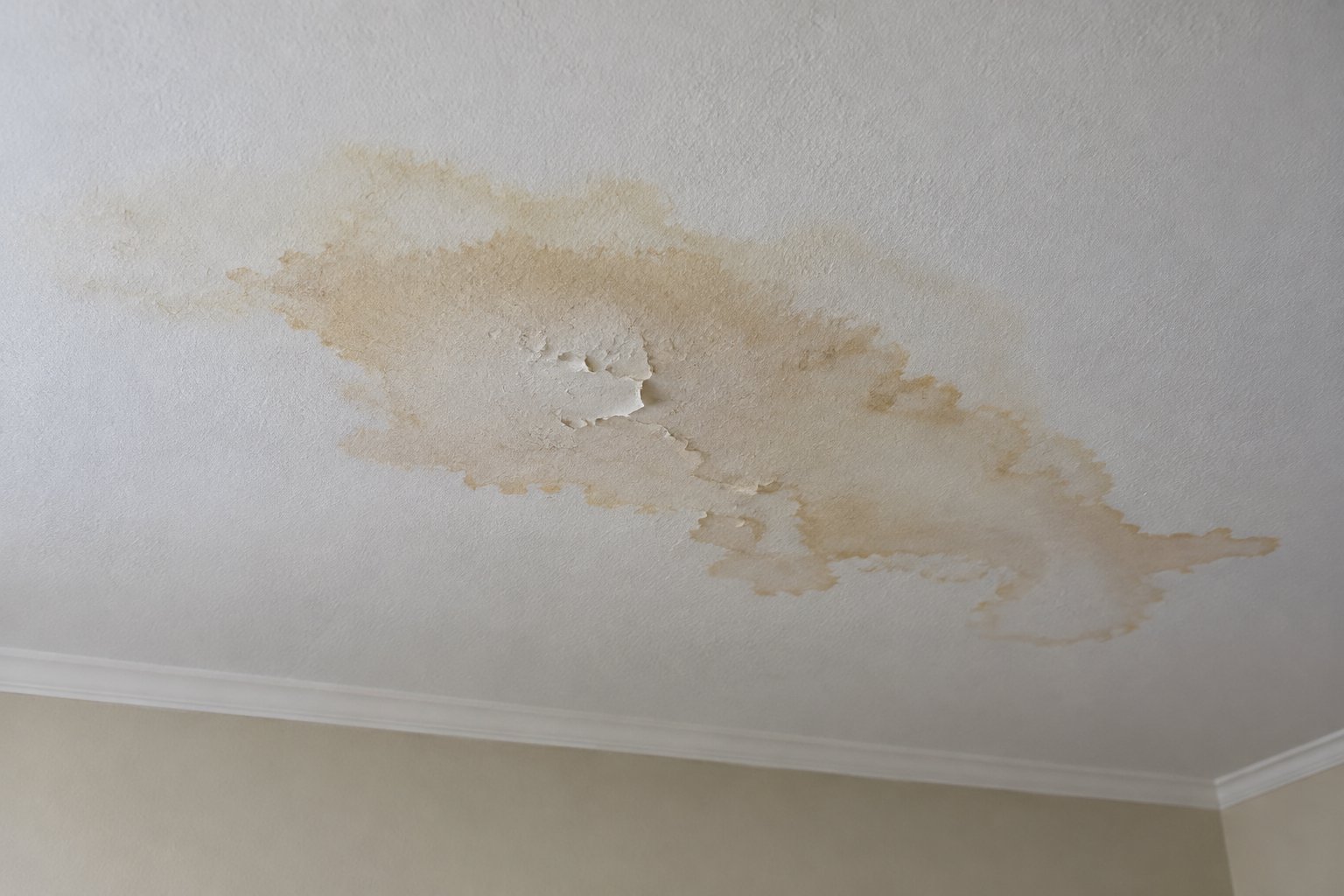
Does homeowners insurance cover roof leaks? Usually yes when a sudden event like wind, hail or a falling tree damaged the roof and let water in, and usually no when the leak comes from age, wear or skipped maintenance. Even when the roof repair itself is denied, some policies still treat the water damage inside as a separate question.
That is why two neighbors can call their insurers after the same thunderstorm and hear different answers. In Southern Maryland, roofs take a steady beating from summer storms, tropical storm remnants and nor'easters, and a lot of homes in Prince George's and Anne Arundel Counties are on their second or third roof. Age and storm damage often show up on the same roof, and the adjuster's job is to separate them.
First, the Adjuster Looks for a Sudden Event
Standard homeowners policies cover damage from named or covered perils, and the ones that most often cause roof leaks are wind, hail, falling trees and limbs, fire and the weight of snow or ice. If one of those opened up the roof and rain followed, you have the foundation of a claim.
The Maryland Insurance Administration frames it from the other direction: if rain enters through a roof that was properly installed and maintained, the resulting damage is typically covered. The phrase "installed and maintained" is doing a lot of work there. An adjuster will look hard at both.
Rain by itself is rarely the covered cause. A heavy downpour that finds a gap around an old vent boot or under a curled shingle has exposed a maintenance issue, not created storm damage.
Next, the Roof Has to Show Storm Damage, Not Just Age
Adjusters read a roof the way a mechanic reads tire wear. Fresh storm damage and old wear leave different marks, and they compare what they see against local weather reports for your date of loss.
Many roofs show some of both. In that case, expect the adjuster to pay for what the storm did and decline what age already did. The Maryland Insurance Administration's roof claim advisory says that damage from wear and tear or deterioration over time generally will not be paid, and that a policy may not cover all or part of a claim when a covered peril hits a roof that already needed maintenance.
Roof Age Changes What a Covered Claim Pays
Roof age affects how much you are paid, not only whether you are paid. On an actual cash value basis, the insurer subtracts depreciation for age, so an older roof brings a smaller check even when the storm damage is clearly covered. Some policies now carry roof endorsements that pay older roofs at actual cash value or on a schedule tied to age, even when the rest of the house is covered at replacement cost.
Check your declarations page and endorsements for any roof-specific language before you file. It will not change whether the storm damage is covered, but it will shape what the claim is worth and whether it is worth filing at all compared with your deductible. Some policies also set a separate deductible for wind or hurricane damage, which the Maryland Insurance Administration notes can be a flat amount or a percentage of your dwelling coverage.
If the adjuster has to choose between patching and replacing, that decision also changes the outcome. Our post on what insurers review in a roof repair vs. replacement claim walks through how that call is made.
Interior Damage Is Its Own Line on the Claim
A covered roof leak can open several parts of your policy at once. Dwelling coverage pays to repair the roof plus wet ceilings, drywall, insulation and flooring. Personal property coverage handles belongings that were soaked. If the home is unlivable during repairs, loss of use coverage may help with temporary housing.
When the roof repair is denied for age, ask specifically how the insurer is treating the interior damage. Policies handle that split differently, and you want the answer in writing rather than assuming the whole claim was denied.
Limiting Damage and Reporting Promptly Protect the Claim
Your policy expects you to take reasonable steps to prevent more damage. Move belongings, catch drips, turn off power to any fixture near water and stay out of rooms with a sagging ceiling. Do not climb onto a wet or storm-damaged roof; an emergency tarp is a job for a roofer.
Keep receipts for tarps, buckets, fans and any emergency service, since reasonable mitigation costs are often reimbursed if the loss is covered. Then report the claim promptly. Late reporting gives an insurer room to question when the damage happened, especially when another storm has rolled through since.
What to Gather Before You File
A roof leak claim is stronger when it answers the adjuster's questions before they are asked:
- Photos and video of interior stains, wet insulation and damaged belongings, plus any storm debris outside
- The date you first noticed the leak and the weather in the days before it
- Any local storm alerts or weather reports for that date
- The year the roof was installed and receipts for past repairs or inspections
- Receipts for emergency steps you took
Our guide on how to document property damage before the adjuster arrives goes deeper on photos and organizing your file.
The piece most homeowners are missing is a professional view of the roof itself. A roofing inspection finds the true source of the leak, which is often several feet from where water shows up inside, and documents storm damage you cannot safely see from the ground. Jenkins Restoration & Remodel provides roof inspections and storm damage repair across Southern Maryland, with photos and a written estimate you can share with your adjuster.
Fix the Source, Not Just the Ceiling
Whatever the claim decision, the repair has to address what let the water in. A patched ceiling under a roof that still leaks will fail again, and a second claim on the same spot looks like a maintenance problem. A roof repaired properly after a covered storm also keeps your next claim on solid ground.
Get a Clear Read on Your Roof Leak
If a storm has left you with a leak and a lot of questions, Jenkins Restoration & Remodel can help you sort out what happened. We inspect storm-related roof leaks for homeowners in Annapolis, Bowie, Waldorf, La Plata, Huntingtown and across Southern Maryland, photograph what we find and keep your insurer in the loop while the repair moves forward. What the claim pays is set by your policy, and we will give you an honest picture of the roof to work from. Call (301) 884-6180 or book a free roof estimate.
Frequently Asked Questions
Will my insurer pay for a whole new roof because of one leak?
Usually not. Insurers typically pay to repair the damaged area unless storm damage is spread across the roof or the repair cannot reasonably match what is there. An inspection showing damage on multiple slopes makes the strongest case for replacement.
Are leaks from ice dams covered?
Many policies cover damage from the weight of ice and snow, but adjusters may question an ice dam claim if poor insulation or ventilation contributed. Coverage depends on your policy wording and the adjuster's findings.
Can I file a claim for a leak I found weeks after a storm?
You can, but expect questions about whether the damage came from that storm. Weather records for the date, photos and a roofer's assessment showing fresh storm damage help connect the leak to the event. Report it as soon as you find it.
Should my roofer be there when the adjuster inspects?
It often helps. Your roofer can point out damage the adjuster might miss and answer questions about how the roof was built. Ask your insurer whether they are comfortable with that and schedule both for the same visit.
What if a neighbor's tree fell on my roof?
In most cases, you file with your own insurer when a healthy tree falls in a storm. If the tree was dead or diseased and your neighbor ignored it, your insurer may seek repayment from the neighbor's insurer. Either way, start with your own policy.