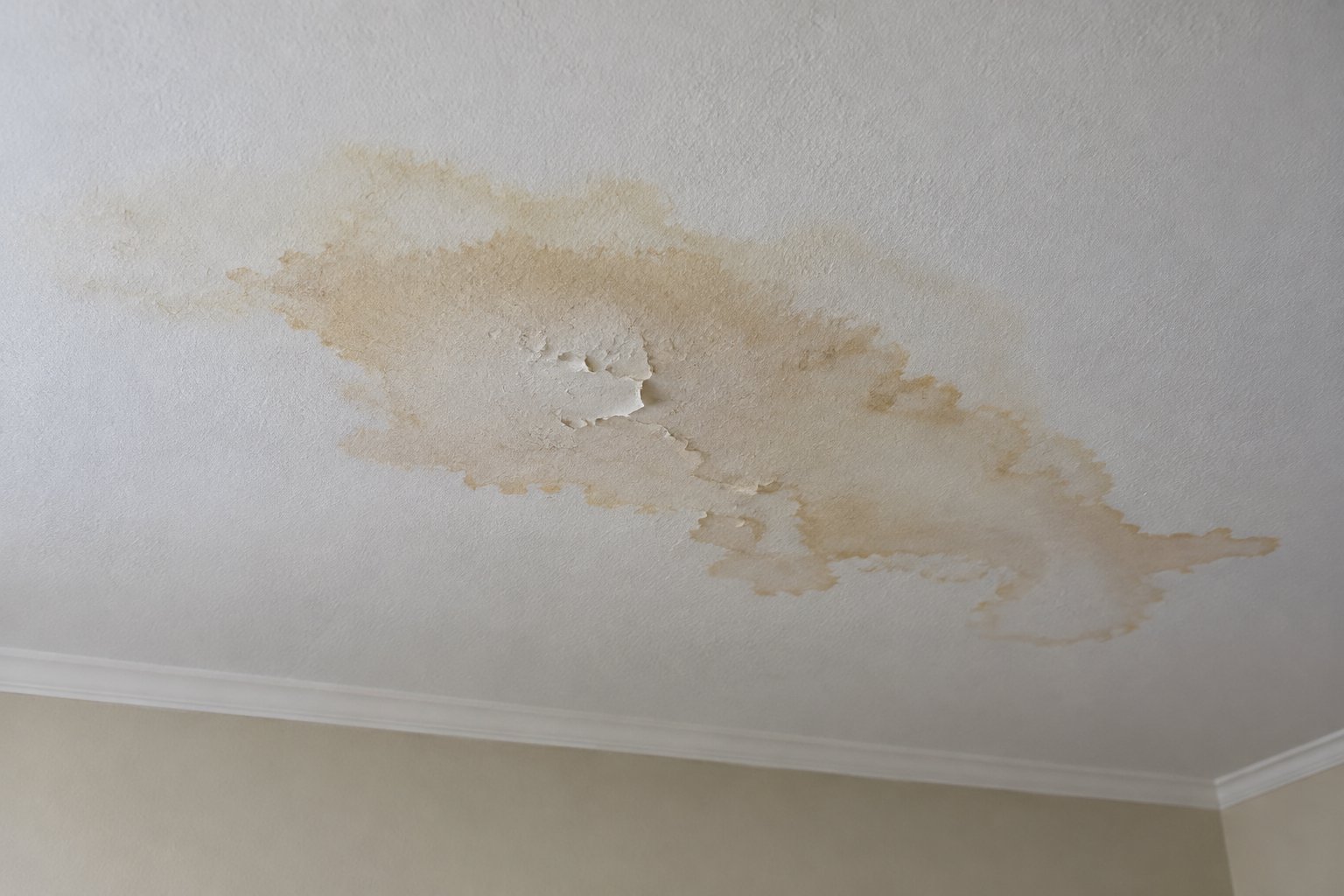
A water stain on ceiling drywall means water has reached the back of the panel at least once, usually from the roof, a bathroom above, an air conditioner drain or attic condensation. The repair always runs in the same order: find and stop the source, let the ceiling dry out, then seal and repaint or replace the damaged section.
Southern Maryland houses get tested from every direction. Summer storms and tropical storm remnants drive rain into roofs, humid months keep air conditioners dripping, and winter cold turns attic moisture into frost. Plenty of older homes in Prince George's and Anne Arundel Counties also have original bathrooms sitting over living space, so a stain can start almost anywhere above you.
Check for These Urgent Signs First
Most stains are old news by the time you spot them. A few are not, and they change what you do today.
- The ceiling sags or bulges. Water is pooling on top of the drywall. Wet gypsum loses its strength, and a bulge can drop without warning, so keep people and pets out from under it.
- It is dripping. The leak is active, and every hour adds water to the insulation and framing above.
- The stain touches a light, fan or smoke detector. Turn that circuit off at the breaker before you go near it.
- The spot feels soft or crumbles when you press it. The panel is already failing.
If you see any of these, put down a bucket and a tarp, move furniture, and shut off the water if a bathroom or kitchen sits directly above. Take photos before you clean anything up. If the drip has already soaked carpet or furniture, our walkthrough of the first 24 hours of water damage cleanup covers drying out the room.
A dry, flat, faded ring that has not changed in weeks is a repair to schedule, not an emergency.
Match the Stain to Its Most Likely Source
Where the stain sits and when it darkens tell you more than anything else. Water runs along rafters, pipes and ducts before it drops, so the actual leak can be a few feet from the mark.
Use timing to confirm the source
Keep a simple note on your phone with dates. If the stain grows after storms but holds steady through dry spells, the roof is your prime suspect. If it changes after someone showers upstairs, run that shower alone for ten minutes and then check the ceiling below with a flashlight held flat against it, which makes fresh dampness easier to see. If it grows on hot, sticky days when the air conditioner runs hard, look at the HVAC drain line.
Spots that appear in winter with no clear pattern often come from condensation. The EPA notes that condensation can be a sign of high humidity and recommends keeping indoor humidity below 60 percent. Bathroom fans that vent into the attic instead of outdoors are a frequent cause in older homes.
Read the color and the edges
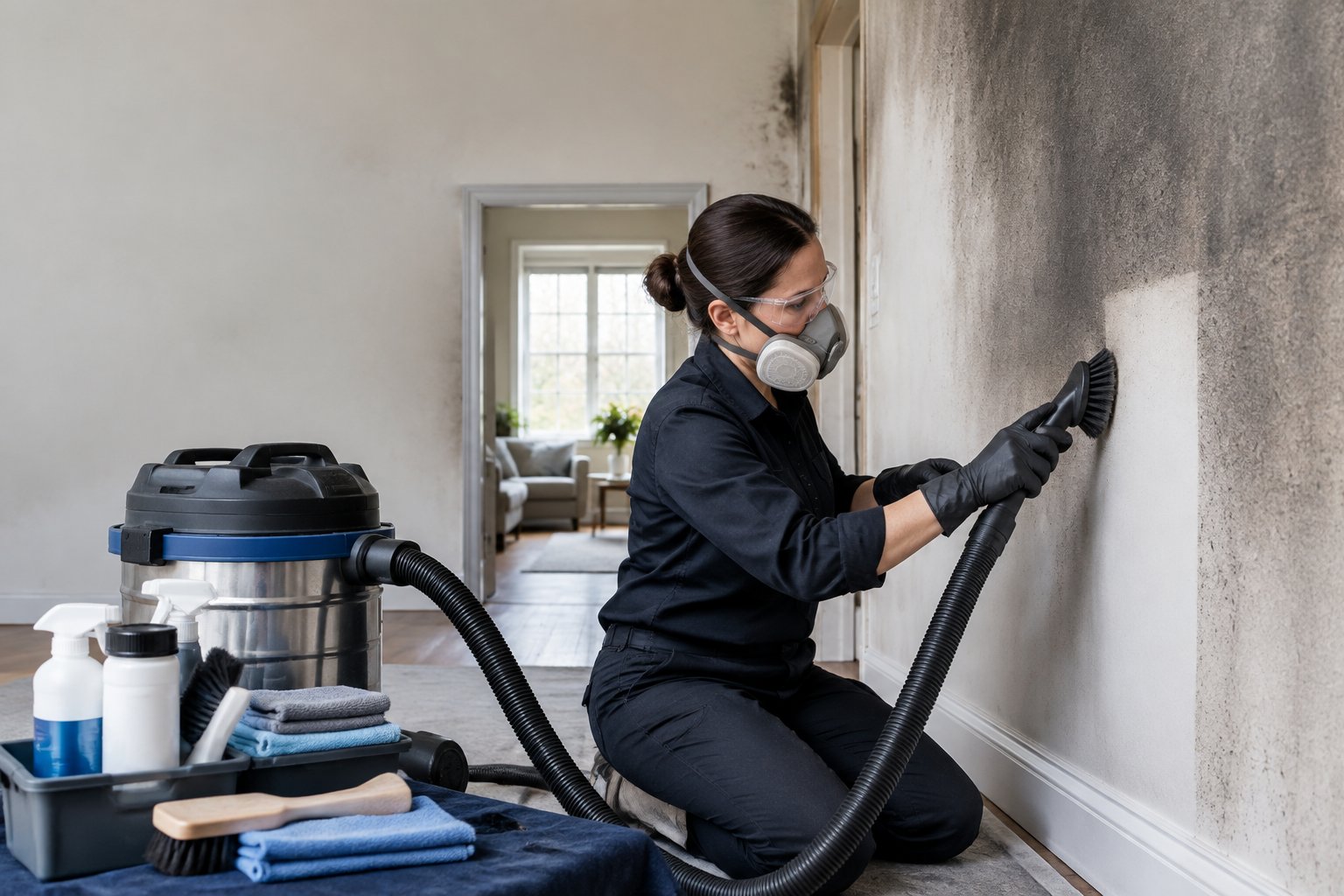
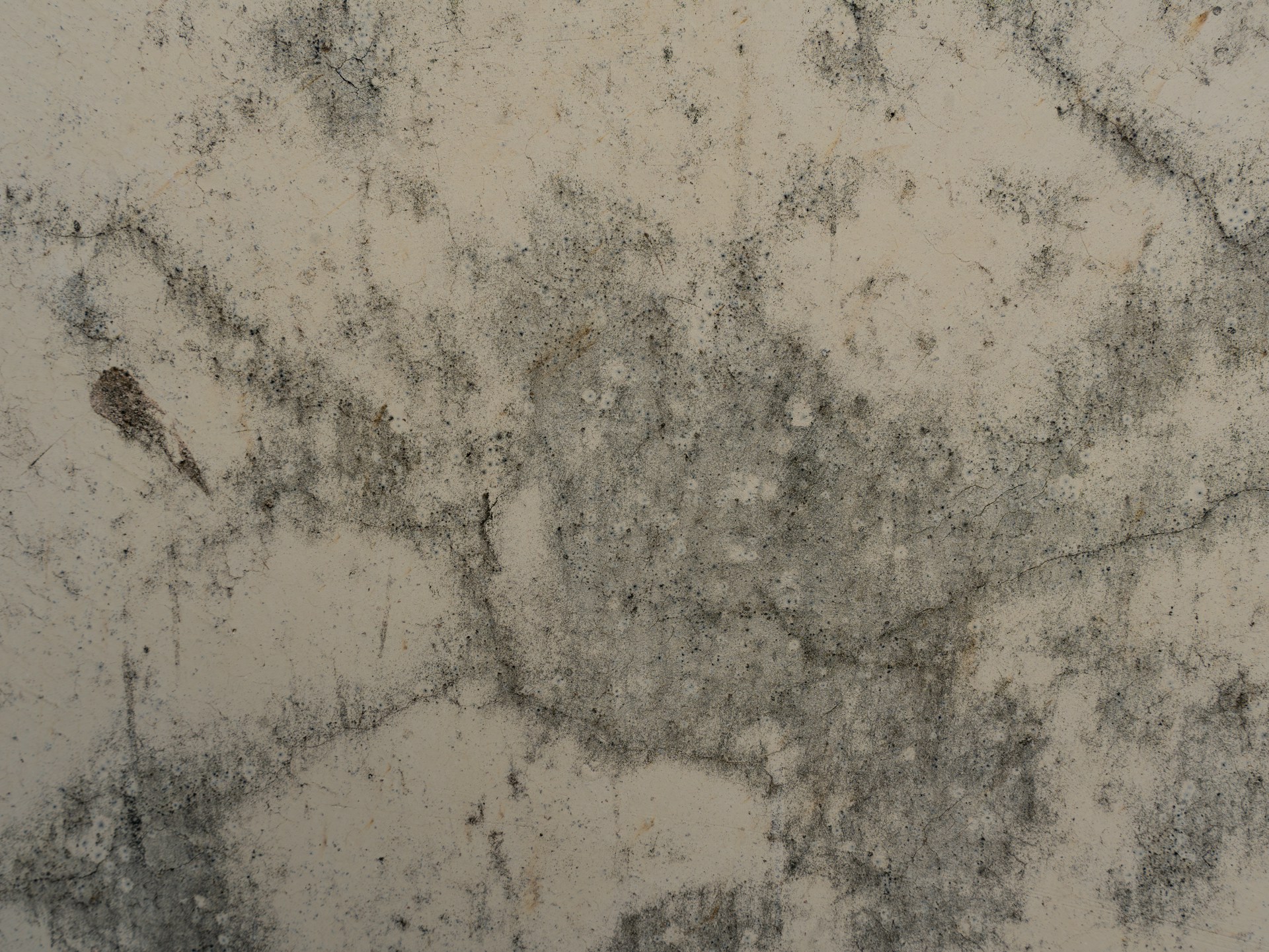
A crisp brown or yellow ring with a darker outline usually marks a single wetting that dried, leaving minerals and wood tannins behind. A blotchy stain with soft, spreading edges suggests water that keeps coming back. Rust-colored streaks can come from roofing nails or iron in the water. Black, green or white fuzzy spots are likely mold, which is work for a mold specialist.
Why Paint Alone Never Solves It
Rolling regular latex paint over the mark is a very common mistake. Water stains bleed back through latex within days or weeks. If the leak is still active, fresh paint also hides the evidence while the insulation above keeps soaking.
A cosmetic fix only holds when three things are true: the source is repaired, the drywall is firm and flat, and the spot has stayed dry through at least one rainstorm or shower that used to make it worse. Then the job is simple:
- Wipe the stain with a barely damp sponge so you do not rewet the paper face.
- Seal it with a stain-blocking primer (oil-based or shellac-based), feathered a few inches past the edge.
- Roll on flat ceiling paint. Ceilings yellow with age, so painting the whole ceiling corner to corner blends better than a spot touch-up.
If the stain returns after that, the leak is not finished.
When the Ceiling Needs to Come Down
Drywall that is soft, swollen, sagging, cracked or peeling at the paper will not recover once it dries. The insulation above it is usually ruined too. Wet batts or blown-in insulation mat down, hold moisture against the drywall and framing, and lose their insulating value.
Opening the ceiling also shows you what the stain was hiding. Water from a roof or bathroom leak often spreads much farther across the top of the drywall than the visible ring suggests, and the joists or roof deck need checking before anything is closed back up. A proper repair cuts the damaged drywall back to solid framing, removes the wet insulation, dries the cavity, then installs new drywall with matched texture and paint.
Speed matters here too. The EPA's guidance gives wet materials only a day or two to dry out before mold becomes a real risk, so a leak that has been feeding a ceiling for weeks deserves a look from above, not just below.
One safety note for older houses: the EPA lists textured paint and patching compounds used on walls and ceilings among materials that may contain asbestos. Have an older textured ceiling tested before anyone sands or scrapes it.
If your stain keeps growing, softens, or comes back after every heavy rain, it is time to have it traced. Jenkins Restoration & Remodel tracks down exactly this kind of leak as part of its roofing services, so you learn quickly whether the trouble starts at the shingles or somewhere inside the house.
Who Fixes Which Part
A ceiling stain often involves more than one trade, and knowing who does what keeps the repair in the right order.
- A roofer repairs shingles, flashing, vent boots and roof edges.
- A licensed plumber fixes toilet seals, supply lines, drains and shower valves.
- An HVAC technician clears condensate lines and replaces drain pans.
- A mold specialist tests and treats visible growth.
- A restoration contractor removes damaged drywall and insulation, dries the area and rebuilds the ceiling.
Jenkins handles the roofing and the water damage restoration and rebuild, and coordinates with the plumber, HVAC tech or mold specialist when the job calls for one. If a storm or another sudden event caused the leak, the team can record the damage for your claim and keep your adjuster updated as the repair moves along. Coverage depends on your policy, so photograph the stain the day you find it and again every few days.
One Team for the Leak and the Ceiling
A ceiling stain is a clue, and a lasting repair starts where the water does. Jenkins Restoration & Remodel, a family-run team based in Hughesville, traces the leak to the roof or to the water problem inside the house, repairs the cause, then restores the ceiling so the mark stays gone. Our team works throughout Prince George's, Anne Arundel, Charles, Calvert and St. Mary's Counties, in towns like Odenton, Clinton and Huntingtown. Call (301) 884-6180 or schedule your free estimate and we will help you sort out the next step.
Frequently Asked Questions
Why is there a water stain on my ceiling when I cannot find a leak?
Some leaks only run under specific conditions, like rain driven from one direction or a condensate line that overflows only in summer. Water can also travel along a rafter or pipe for several feet before it drops. After the next storm, check the attic above the stain with a flashlight while the wood is still wet.
Could the stain be left over from a previous owner?
Yes. A stain that is dry, firm and unchanged through several storms may be old, especially if the roof was replaced since. If you recently bought the house, it is still worth having the roof and the bathroom above checked so you know the cause was actually fixed.
Will bleach remove a ceiling water stain?
A diluted bleach wipe can lighten faint marks, but it rarely removes a defined ring or mineral deposits. Wear eye protection when working overhead and keep the sponge only slightly damp. You will still want a stain-blocking primer before paint.
How long should I wait before painting a stained ceiling?
Hold off until the repair has been tested by real conditions, such as a heavy rain or a week of normal showers upstairs, with no new dampness. Small, shallow dampness often dries in a few days with good airflow. If the area still feels cool or soft, give it more time or have it checked.
Is a stained ceiling a sign the whole roof needs replacing?
Not usually. Many roof leaks come from a single failed vent boot, a lifted shingle or a gap in flashing, and those can be repaired on their own. An inspection tells you whether the problem is isolated or the roof is near the end of its life.