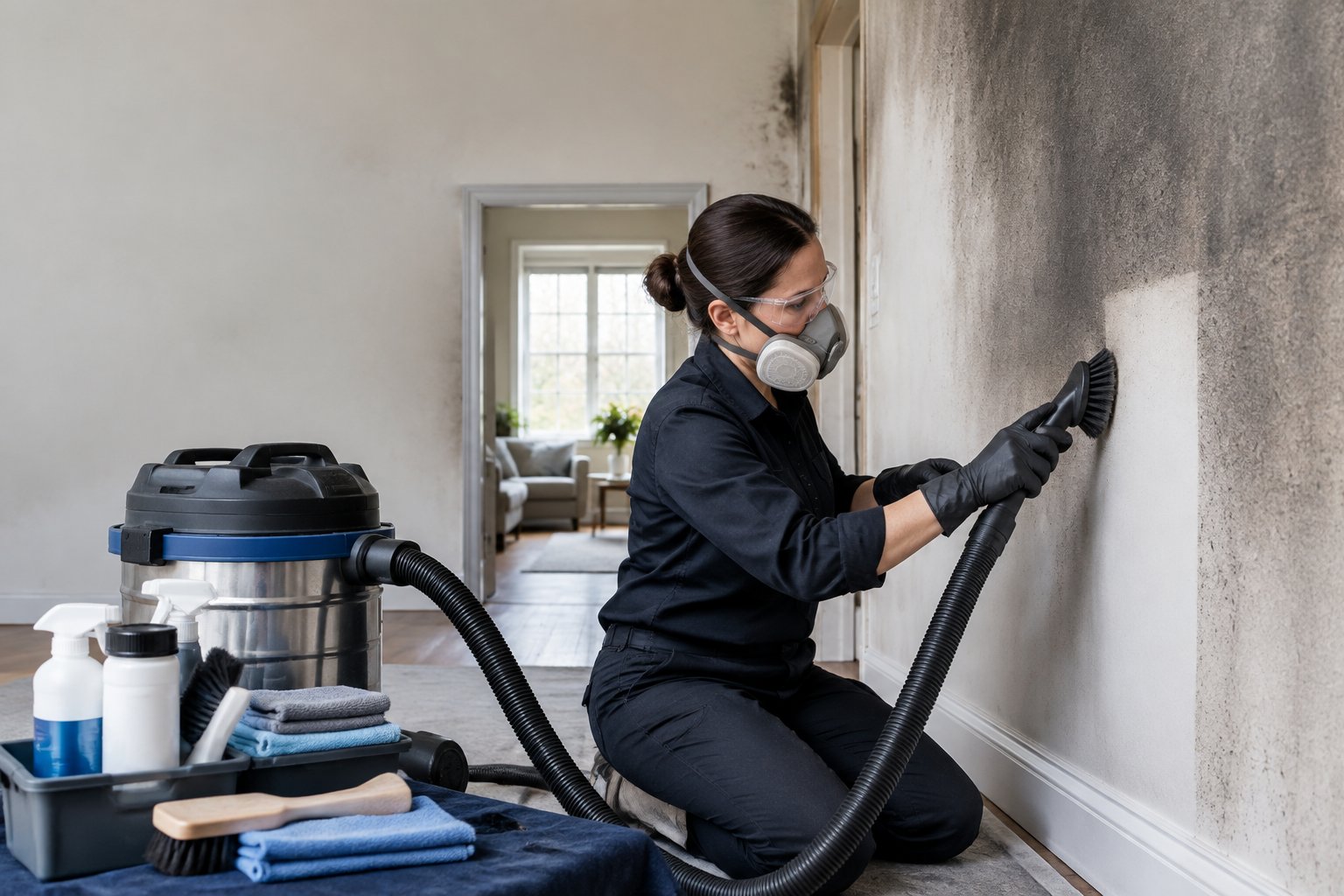
Safe soot removal starts dry. Lift loose soot with a HEPA vacuum and a dry chemical sponge before any water or cleaner touches the surface, then wash only what the surface can handle. Light, dry soot on a small area is a fair DIY job, while oily soot, kitchen fire residue and anything tied to an insurance claim is best handled by a restoration crew.
The order matters because the most common mistake is the most natural one. Grab a wet rag, wipe a sooty wall, and you have pushed the residue into the paint, turning a cleaning job into a priming and painting job.
Soot Is Not One Thing
What burned, how hot it burned and how much air the fire had all change the residue it leaves. Most house fires leave more than one type in different rooms, so look closely before you pick a method.
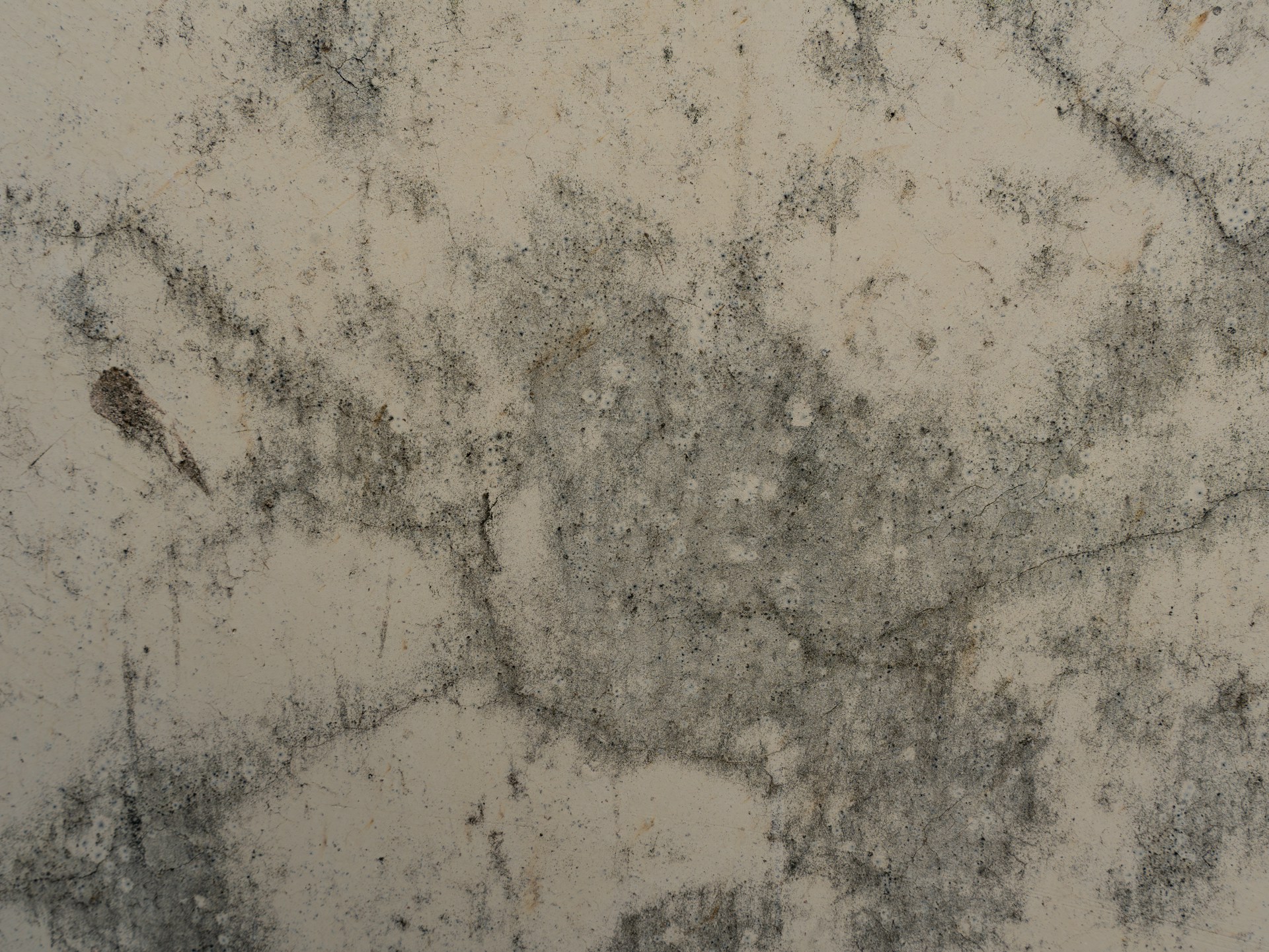
A quick test: touch a hidden spot with a fingertip. If the soot falls off as dust, it is dry. If it smudges into a streak, it is oily, and dry sponging will barely touch it.
Gear Up Before You Touch Anything
Cleaning stirs soot back into the air, so exposure is highest while you work. The EPA's fact sheet on protecting yourself from ash recommends a snug-fitting NIOSH-approved N95 or P100 respirator, noting that surgical masks and one-strap dust masks will not protect your lungs. It also advises gloves, long sleeves and long pants, keeping children and pets away, and avoiding dry sweeping. People with heart or lung disease, older adults and pregnant women should sit the cleanup out.
Before cleaning anything after a house fire, photograph each room and every stained surface. Call your insurer and ask what they need documented first. Adjusters often want to see soot in its original state.
Turn the HVAC off while you work so the blower does not carry soot into clean rooms, and lay drop cloths under your work area.
The Dry Removal Step
Two tools do most of the work, and both are available at hardware stores.
HEPA vacuum. The Alabama Cooperative Extension's guidance on cleaning after a fire says to vacuum soot and ash off items first, ideally with a HEPA filter, and to keep the nozzle and brush from touching the surface. Hold the attachment just above the surface and let the suction pull the soot up. A regular vacuum without a HEPA filter blows the finest particles right back into the room.
Dry chemical sponge. Sometimes sold as a soot sponge or dry cleaning sponge, this is a block of vulcanized rubber that grabs soot without water. Wipe in one direction with light, overlapping strokes. When a side turns dark, trim it off or switch faces. Never wet it, since water ruins it.
The same extension guidance warns that water and cleaning solutions drive soot and ash further into a surface. That is why dry removal always comes first, on nearly every material.
Cleaning Soot by Surface
After the dry step, the material decides what comes next. Always test a cleaner on a hidden spot before using it on an open area.
Painted Walls and Ceilings
Once the loose soot is gone, wash with a mild detergent. The American Red Cross guidance on cleaning up after a fire recommends washing walls one small area at a time, working from the floor up to prevent streaking, rinsing with clear water right away, and washing ceilings last. It also says not to repaint until walls and ceilings are completely dry.
Use a damp cloth, not a soaking one. Flat and matte paint is porous and stains most easily, while semi-gloss and gloss release soot more readily. Trisodium phosphate (TSP) is a stronger option for stubborn film, but it is caustic and can dull paint, so wear gloves and eye protection and follow the label exactly.
Wallpaper and Bare Drywall
Stay with dry methods on wallpaper, since water can lift seams or bubble the paper. Washable wallpaper can take a light wipe, but do not soak through it. Unpainted drywall absorbs soot quickly, and heavy staining there usually means cutting out and replacing the panel.
Cabinets and Finished Wood
Dry sponge first, then a wood-safe cleaner on a soft cloth, wiping with the grain. Wood swells when wet, so keep moisture to a minimum. Unfinished wood soaks up soot deeply and may need sanding and refinishing.
Metal, Glass and Glazed Tile
These non-porous surfaces clean up most completely, but do not leave them long, since soot is acidic and can stain or pit metal finishes over time. Vacuum first, then spray glass cleaner onto a cloth rather than the glass. Stainless steel responds to a dry sponge followed by a stainless cleaner wiped with the grain. Use a pH-neutral cleaner on glazed tile and sealed stone, and expect grout to hold stains longer than the tile.
Brick, Block and Stone
Masonry around fireplaces and in basements has deep texture that traps soot. Vacuum thoroughly, then try a masonry-safe cleaner with a stiff nylon brush. Heavy staining on porous brick or concrete block often needs professional cleaning methods.
Fabrics, Upholstery and Carpet
The extension guidance cautions that fabric can look intact but fall apart when moved, so handle burned or heavily sooted textiles gently. Vacuum them before unfolding or shaking. Washable items go in a separate load, sometimes more than once. Carpet, mattresses and upholstered furniture with heavy soot usually need professional cleaning or replacement, because rubbing drives soot deeper into the fibers.
Electronics and Appliances
Do not switch on electronics exposed to heavy smoke until a qualified technician has checked them. Soot can corrode circuits and conduct electricity.
Habits That Make Soot Damage Worse
A few household instincts work against you:
- Wiping or scrubbing before vacuuming, which smears soot into the surface
- Using bleach, which does not remove soot and can discolor finishes
- Mixing cleaning products, which can release dangerous fumes
- Painting straight over soot stains, which bleed through regular paint
- Running the furnace or air conditioning before the house is clean
When Soot Removal Should Go to a Pro
Leave it to a restoration crew if the soot is oily or sticky, came from burned plastics or a kitchen grease fire, covers more than one room, has reached ceilings and vents, or came from any fire your insurance company is involved in. These jobs need testing, containment and the right cleaners matched to the residue, and the wrong first move can set stains permanently. If that sounds like your home, Jenkins Restoration & Remodel can assess the damage and handle fire and smoke damage restoration from cleaning through rebuilding.
Professional crews work in a set order: inspect with angled light to find thin films, test small areas, contain the work zone, dry-remove loose soot, then apply cleaners matched to each residue type. This look at what happens before fire damage repairs begin walks through those early stages. Kitchen fires bring their own challenges with protein residue on cabinets and walls, covered in this guide to kitchen fire restoration for a safe return home.
Sealing and Repairing What Cleaning Cannot Fix
If a faint shadow remains after cleaning, soot has reached into the paint or the drywall paper. Regular paint will not cover it. A stain-blocking primer, typically oil-based or shellac-based, locks the stain in place so the finish coat stays clean. The surface needs to be clean, dry and sound before priming.
Drywall that is burned, crumbling or soaked through with oily soot gets cut out and replaced, along with damaged trim, cabinet panels or flooring. That rebuild work is where a restoration contractor takes over from cleaning.
Get Your Rooms Back to Clean and Whole
Soot that is cleaned in the right order comes off far more completely, and anything that cannot be cleaned can be sealed or rebuilt. Jenkins Restoration & Remodel restores fire-damaged homes across Southern Maryland, with families in Crofton, Clinton, Waldorf and Leonardtown among the neighbors we serve. We help with your claim from the first walkthrough to the final repair and communicate directly with your adjuster. Call (301) 884-6180 or request a free fire damage estimate to talk through your home.
Frequently Asked Questions
Can I use a magic eraser on soot?
Melamine sponges are mildly abrasive and usually get used wet, so they can smear soot and dull paint. Use a dry chemical sponge first. A melamine sponge can help on small leftover marks on glossy surfaces, but test a hidden spot.
Does vinegar remove soot?
Vinegar does little against soot itself. It can work as a final rinse on glass once the soot is gone, but avoid it on natural stone and grout, which acids can etch. Oily soot needs a degreasing cleaner instead.
How do I clean soot off a brick fireplace surround?
Vacuum with a brush attachment held just off the surface, then scrub with a masonry-safe cleaner and a stiff nylon brush, rinsing a small section at a time. Wire brushes can scratch softer brick and stone. Old, baked-on staining may not come out fully.
Should I clean soot before the insurance adjuster visits?
Light cleaning to protect the home is usually fine once your photos are taken, but do not throw out sooty furniture, rugs or clothing until the adjuster has seen them or approved disposal. A list of discarded items with photos makes the contents part of the claim much easier to settle.
Can soot show up in rooms the fire never reached?
Often, yes. Smoke follows air currents through doorways, stairwells and ductwork, so a thin film can settle in bedrooms and closets far from the fire. Check the tops of door frames, the insides of closets and the wall around supply vents, where residue tends to collect first.