.png)


Storms can cause sudden and overwhelming damage to your home. From roof leaks and broken windows to water intrusion and scattered debris, the aftermath often leaves homeowners unsure where to start.
At Jenkins Restoration and Remodel, we help homeowners navigate the wind and storm damage restoration cleanup process with clear guidance, professional repairs, and support through the insurance process.
In this guide, you will learn the key steps to take after a storm, how the cleanup and restoration process works, and what to look for when choosing the right restoration professionals.
How Wind And Storm Damage Affects Your Property
Wind and severe storms can damage your property in many ways, ranging from roof damage to deeper structural issues. Understanding what to look for after a storm helps you respond quickly and reduce the chances of further damage developing.
Common Types Of Wind And Storm Damage
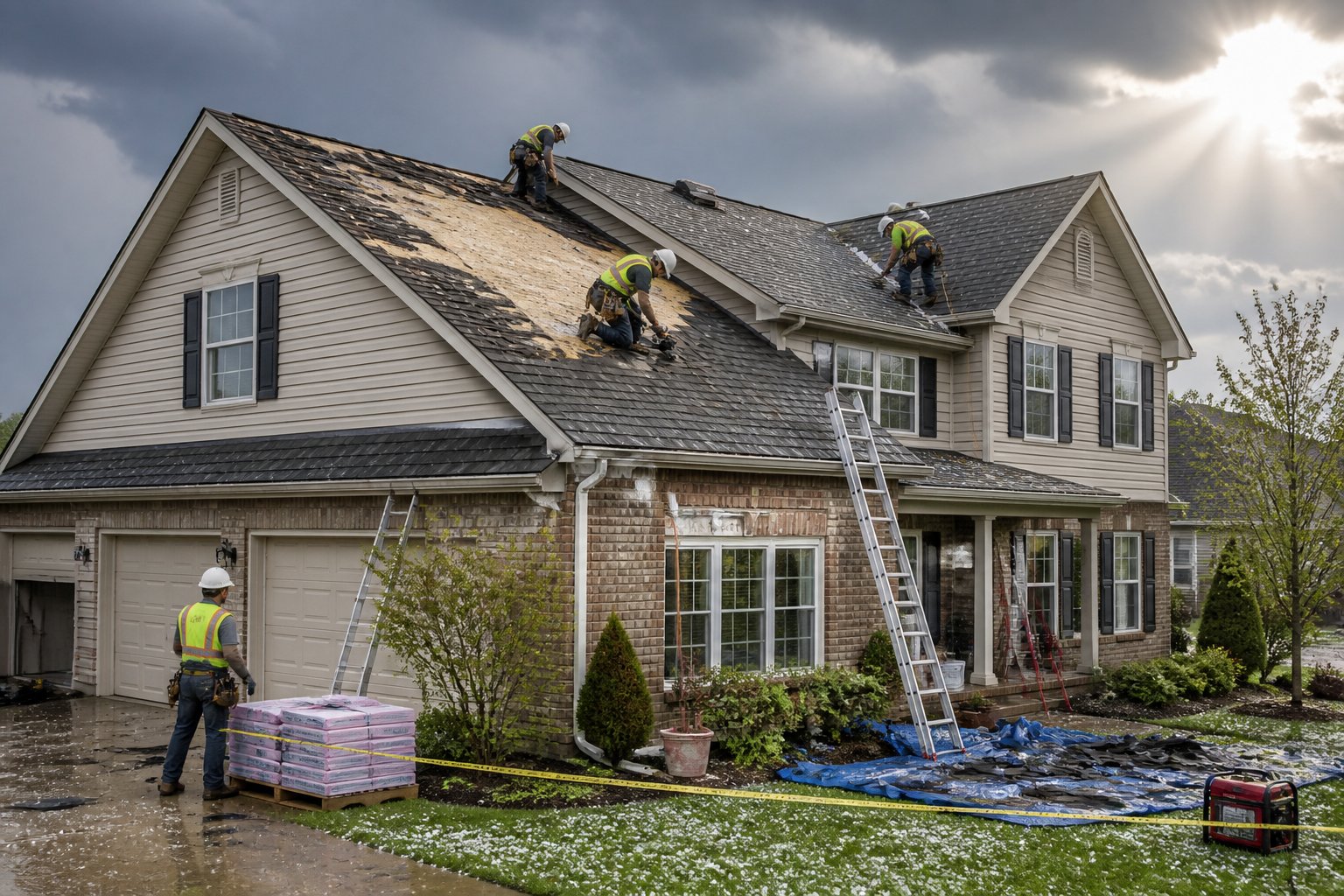
Roof damage is one of the most common issues after a storm. Strong winds can tear off shingles, lift roofing materials, or create openings that allow rainwater to enter the home. After a storm, you may notice missing shingles, curled edges, or exposed roofing underlayment, all of which can allow moisture to reach the structure beneath.
Siding and exterior walls can also suffer heavy impact during high winds. Storms often turn everyday objects into airborne debris, and items such as branches, patio furniture, or loose outdoor equipment can strike the home with force. These impacts may crack siding, dent exterior surfaces, or shatter windows, creating openings where water can enter.
Water damage often follows these types of structural openings. Rainwater can soak insulation, stain ceilings, and spread moisture throughout attic spaces or interior walls. Gutters and downspouts may also be torn away by wind, causing water to collect near the foundation and increasing the risk of long-term structural problems.
Trees and large branches may fall directly onto roofs or vehicles during strong storms. Even smaller debris can damage siding, break windows, and harm outdoor features such as decks, fences, and sheds.
Signs Of Storm Impact On Property
After a storm passes, begin by looking for visible exterior damage around the property. Missing shingles, dented siding, broken windows, and scattered debris can all signal that your home has experienced storm impact. It is also helpful to check your yard for fallen branches or debris resting on the roof.
Inside the home, pay attention to signs of moisture. Water stains on ceilings or walls, dripping water, or damp areas may indicate that the roof or exterior has been compromised. These warning signs often appear shortly after rainfall begins entering the structure.
Structural changes may also appear following severe weather. For example, new wall cracks, doors that suddenly stick, or sagging roof areas can indicate shifting or damage within the home’s framework. Unusual sounds such as creaking or rattling may also suggest structural stress.
Other areas worth inspecting include flashing around chimneys and roof vents, as well as gutters and downspouts. If these components are loose or damaged, water can enter the home unnoticed. In attic spaces, look for wet insulation or daylight shining through the roof, both of which signal the need for prompt repairs.
Potential Risks After A Storm
Even when damage appears minor at first, storms can create hidden risks that worsen over time. One of the most common issues is hidden moisture trapped inside walls, ceilings, or flooring materials. When moisture remains in these areas, mold growth can begin within 24 to 48 hours, potentially affecting both indoor air quality and repair costs.
Structural weakness is another concern after severe weather. Roof trusses, framing, and load-bearing beams may become compromised if they absorb water or experience heavy impact. While the structure may initially appear stable, hidden damage can reduce the building’s strength over time.
Electrical hazards can also develop if water reaches wiring, outlets, or electrical panels. Damaged wiring increases the risk of fire or electric shock, making professional inspection important when storm damage affects electrical systems.
Storm damage may also create new entry points for pests. Cracked siding, damaged roofing, and broken vents can allow rodents or insects to enter the home, leading to additional property damage if repairs are delayed.
Immediate Steps After A Storm
The hours following a storm are extremely important. Taking careful and timely action can reduce further damage and help your wind and storm damage restoration cleanup move forward more efficiently.
Ensuring Safety First
Your safety should always be the top priority when returning to a property after a storm. Before going outside or entering your home, wait until local authorities confirm that conditions are safe. Storms often leave behind hidden hazards that may not be immediately visible.
One of the most dangerous risks involves downed power lines. Even if a fallen line appears inactive, it should always be treated as if it is live. Maintain a distance of at least thirty feet and contact your local utility provider immediately.
Gas leaks are another serious concern following severe weather. If you smell gas or hear a hissing sound, leave the area immediately and call your gas provider from a safe location. Avoid using matches, lighters, or electrical switches until the issue has been professionally addressed.
If water has entered the home and is near electrical outlets or wiring, shutting off the main power supply may be necessary. However, if reaching the electrical panel would require standing in water, it is safer to contact a licensed electrician for assistance.
Finally, carefully look for signs of structural damage such as sagging ceilings, leaning walls, or shifting foundations. If the building appears unstable, remain outside and wait for professionals to inspect the structure.
Assessing Damage Safely
Before beginning any cleanup, take time to document the damage thoroughly. Photographs and videos of the property provide important evidence for insurance claims and help restoration professionals understand the extent of the damage.
Capture images of roof damage, broken windows, water leaks, fallen trees, damaged siding, and interior water stains. These records should include multiple angles so the full extent of the damage is clearly visible.
During daylight hours, walk carefully around the exterior of the property to inspect roofing materials, gutters, siding, and windows. Look for missing shingles, loose flashing, and debris that may have struck the home.
Basements and crawl spaces should also be inspected for flooding or water intrusion. Even small amounts of standing water can lead to foundation concerns or mold growth if not addressed promptly.
Creating a written list of damaged belongings is also helpful. Including descriptions and approximate values of affected items will make the insurance claim process smoother and more organized.
Initial Cleanup Measures
Removing standing water should be one of the first cleanup priorities. When water remains in the home, mold and structural damage can begin to develop quickly. Using tools such as wet vacuums, pumps, or buckets can help remove water while waiting for professional restoration assistance.
Wet furniture, rugs, and other belongings should be moved to dry areas whenever possible. If weather conditions allow, placing these items outdoors in sunlight can help speed the drying process.
Temporary protection can also reduce further damage. Covering roof openings or broken windows with tarps or plastic sheeting helps prevent additional rainwater from entering the structure. Tarps should be secured with boards and fasteners so they remain in place during wind.
It is important not to discard damaged belongings until your insurance adjuster has documented them. Store debris safely and take photographs before disposing of items to ensure they are included in the claim.
Clearing smaller debris from your yard can also help reduce hazards and prevent loose materials from becoming airborne during future storms.
Comprehensive Damage Restoration Process
A full wind- and storm-damage restoration cleanup involves far more than basic debris removal. Professional restoration follows a structured process that includes hazard removal, water extraction, structural repairs, and restoration of personal belongings.
Debris And Hazard Removal
The restoration process typically begins with removing dangerous debris from the property. Fallen tree limbs, shattered glass, damaged roofing materials, and scattered branches can create serious safety risks if left unattended.
Restoration crews carefully remove large debris while also inspecting the area for hidden hazards. These may include exposed electrical wires, unstable walls, or sharp materials buried beneath storm debris.
Because storm debris is often wet, it may also contain bacteria or mold. Prompt removal helps reduce contamination risks and prepares the property for the next stage of restoration.
During this phase, professionals evaluate which materials can be salvaged and which must be discarded. This careful sorting process helps minimize unnecessary losses.
Water Extraction And Drying
Once debris has been removed, the next step is eliminating any standing water and drying affected materials. Quick water removal is critical because prolonged moisture can damage structural components and encourage mold growth.
Restoration professionals use high-capacity pumps and industrial vacuums to extract water from flooring, carpets, and other affected areas. After water removal, air movers and commercial dehumidifiers are installed to circulate air and remove excess moisture from the environment.
Specialized moisture meters are used throughout the drying process to track moisture levels within walls, flooring, and insulation. Monitoring ensures that hidden moisture pockets are fully addressed before repairs begin.
Soft materials such as carpets, upholstery, and rugs often require additional drying and sanitation to prevent odors, bacteria, and long-term deterioration.
Structural Repairs
After the structure has been fully dried, restoration teams begin repairing damaged areas of the property. This phase may involve roof repairs, window replacement, siding restoration, and rebuilding sections of drywall or framing.
Wind and water damage can weaken key structural components such as beams, framing, and load-bearing supports. Contractors carefully inspect these areas and reinforce or replace materials when necessary.
Roof repairs are usually prioritized because stopping further water intrusion protects the interior of the home. Temporary tarps may remain in place until permanent roofing materials are installed.
During structural repairs, technicians may also inspect and repair electrical systems, plumbing lines, and HVAC components that were affected by the storm.
Restoration Of Personal Belongings
Storm damage frequently impacts personal belongings throughout the home. Furniture, electronics, documents, photographs, and clothing can all be affected by water, debris, or contamination.
Restoration professionals evaluate each item individually to determine whether it can be cleaned and restored. Electronics may undergo careful cleaning to remove moisture and debris, while important papers and photographs may receive specialized drying treatments to prevent deterioration.
Furniture, textiles, and household goods are often cleaned, sanitized, and deodorized when restoration is possible. This process helps return salvaged belongings to a safe and usable condition.
If certain items cannot be restored, they are documented carefully for insurance purposes so homeowners can include them in their claim.
Working With Professional Restoration Services
Professional restoration teams bring the experience, training, and equipment necessary to manage complex storm recovery projects and complete wind and storm damage restoration cleanup safely and efficiently.
Benefits Of Hiring Certified Experts
Certified restoration professionals are trained to identify damage that may not be visible during a basic inspection. Moisture can hide behind walls, under flooring, and inside insulation, and locating these areas requires specialized equipment.
Professional crews use industrial drying systems, moisture detection tools, and air filtration equipment designed specifically for large-scale water and storm damage restoration.
Because restoration teams follow proven procedures, they can often complete projects much faster than homeowners attempting cleanup on their own. Faster drying reduces the chances of mold growth and additional structural damage.
Many restoration providers also offer emergency services around the clock. Immediate actions such as roof tarping and window board-ups can prevent additional damage while full repairs are planned.
Choosing The Right Restoration Company
Selecting the right restoration company is an important step in the recovery process. Always confirm that the company is properly licensed and insured before signing any agreement.
Certifications from recognized organizations such as the IICRC (Institute of Inspection, Cleaning and Restoration Certification) demonstrate that technicians follow industry standards.
Homeowners should also review feedback from multiple sources and ask neighbors or community members for recommendations. Personal experiences can often reveal valuable insight about service quality.
Obtaining written estimates from several companies is another helpful step. Comparing the scope of work, response time, and restoration methods provides a clearer picture of the services being offered.
Finally, it can be beneficial to work with restoration professionals who are comfortable coordinating with insurance companies. Clear communication between all parties helps reduce confusion during the claims process.
What To Expect During Cleanup
When restoration professionals arrive, they begin with a thorough inspection of the property. They document all damage, take photographs, and develop a restoration plan outlining the steps required to return the property to its original condition.
Emergency stabilization work typically comes first. This stage includes water removal, debris cleanup, and installation of drying equipment to control moisture throughout the structure.
Technicians monitor moisture levels daily to ensure that all materials are fully dried before repairs begin. Once drying is complete, cleaning and sanitation processes remove contaminants and prepare the property for rebuilding.
During the final phase, contractors repair structural damage, replace drywall, restore roofing and siding, and address any other components affected by the storm. Throughout the project, homeowners should receive regular updates about progress and any unexpected findings.
Preparing For Future Storms
Taking preventative measures before storms occur can significantly reduce damage and make recovery easier if severe weather strikes again.
Preventative Maintenance Tips
Routine property maintenance plays an important role in storm protection. Inspecting your roof at least twice each year allows you to identify loose shingles, damaged flashing, or worn areas around chimneys and vents before storms arrive.
Keeping gutters and downspouts clear is another critical task. When gutters become clogged, rainwater can overflow and collect near the foundation, increasing the risk of structural damage.
Trees should be trimmed regularly to remove dead branches or weak limbs that may fall during strong winds. Branches hanging directly over the roof should also be cut back to reduce the chance of impact damage.
Outdoor items such as patio furniture, grills, and decorations should be secured or stored when severe weather is expected. Checking fences for loose posts or weakened sections can also help prevent damage during high winds.
Emergency Preparedness Planning
Creating a household emergency plan helps ensure everyone knows how to respond during severe weather. Families should discuss evacuation routes, emergency contacts, and safe meeting locations if members become separated.
Preparing an emergency supply kit is another important step. This kit should include water, non-perishable food, flashlights, batteries, first aid supplies, and necessary medications to support the household for at least three days.
Important documents such as identification, insurance policies, and property records should be stored in waterproof containers. Having these documents protected and accessible can make recovery much easier if damage occurs.
It is also helpful to take photos or videos of your home and belongings before storm season begins. These records can provide valuable documentation for insurance claims.
Understanding Insurance Coverage
Understanding your homeowner’s insurance policy can make the recovery process less confusing after a storm. Most standard policies cover wind damage, but flooding is often excluded and requires a separate flood insurance policy.
Review your deductible amounts and coverage limits carefully, especially if your policy includes separate wind or hail deductibles. These deductibles may differ from your primary policy deductible.
If any part of your coverage is unclear, speaking with your insurance agent can help clarify what is and is not included.
Keeping records of property maintenance and upgrades is also beneficial. Improvements such as impact-resistant roofing, storm shutters, or upgraded windows may qualify for insurance discounts in some cases.
Recovering From Wind And Storm Damage With Confidence
Storm damage can leave homeowners dealing with roof leaks, water intrusion, and unexpected repairs. Acting quickly and starting the wind- and storm-damage restoration cleanup process early can prevent further damage and help restore safety to your home.
At Jenkins Restoration and Remodel, homeowners across Southern Maryland rely on experienced professionals to handle inspections, cleanup, structural repairs, and insurance coordination with care and precision.
If your property has been affected by severe weather, get in touch to schedule a consultation and begin restoring your home with confidence.
Frequently Asked Questions How Long Does Wind And Storm Damage Restoration Cleanup Take?
The timeline depends on the extent of the damage. Minor cleanup and repairs may take a few days, while severe storm damage involving structural repairs, water removal, and rebuilding can take several weeks. The process usually begins with debris removal and drying before moving into repairs and restoration.
What Should I Do Immediately After Storm Damage?
Your first priority should be safety. Avoid downed power lines, check for structural hazards, and document the damage with photos and videos. Once it is safe, contact professionals to begin the wind and storm damage restoration cleanup process so water damage and mold risks can be minimized.
Does Homeowners Insurance Cover Wind And Storm Damage?
Most homeowner insurance policies cover wind-related damage such as roof loss, broken windows, and structural issues caused by storms. However, flooding is often excluded from standard policies and may require separate flood insurance coverage. Reviewing your policy details and contacting your insurance provider can help clarify your coverage.
Can I Handle Storm Damage Cleanup Myself?
Homeowners can often remove small debris and take temporary protective steps, such as covering broken windows or roof openings. However, professional restoration is recommended when there is structural damage, significant water intrusion, or electrical hazards. Specialists have the equipment needed for proper drying, repairs, and safe restoration.
How Do Professionals Dry A Home After Storm Damage?
Restoration teams use industrial pumps, air movers, and commercial dehumidifiers to remove moisture from floors, walls, and hidden structural spaces. Moisture meters help monitor drying progress to ensure all materials are properly dried before repairs begin.
How Can I Reduce Storm Damage To My Home In The Future?
Regular maintenance can significantly reduce storm-related damage. This includes inspecting your roof, cleaning gutters, trimming trees near the house, and securing outdoor furniture before storms. Creating an emergency plan and documenting your home’s condition before storm season can also help speed up recovery if damage occurs.