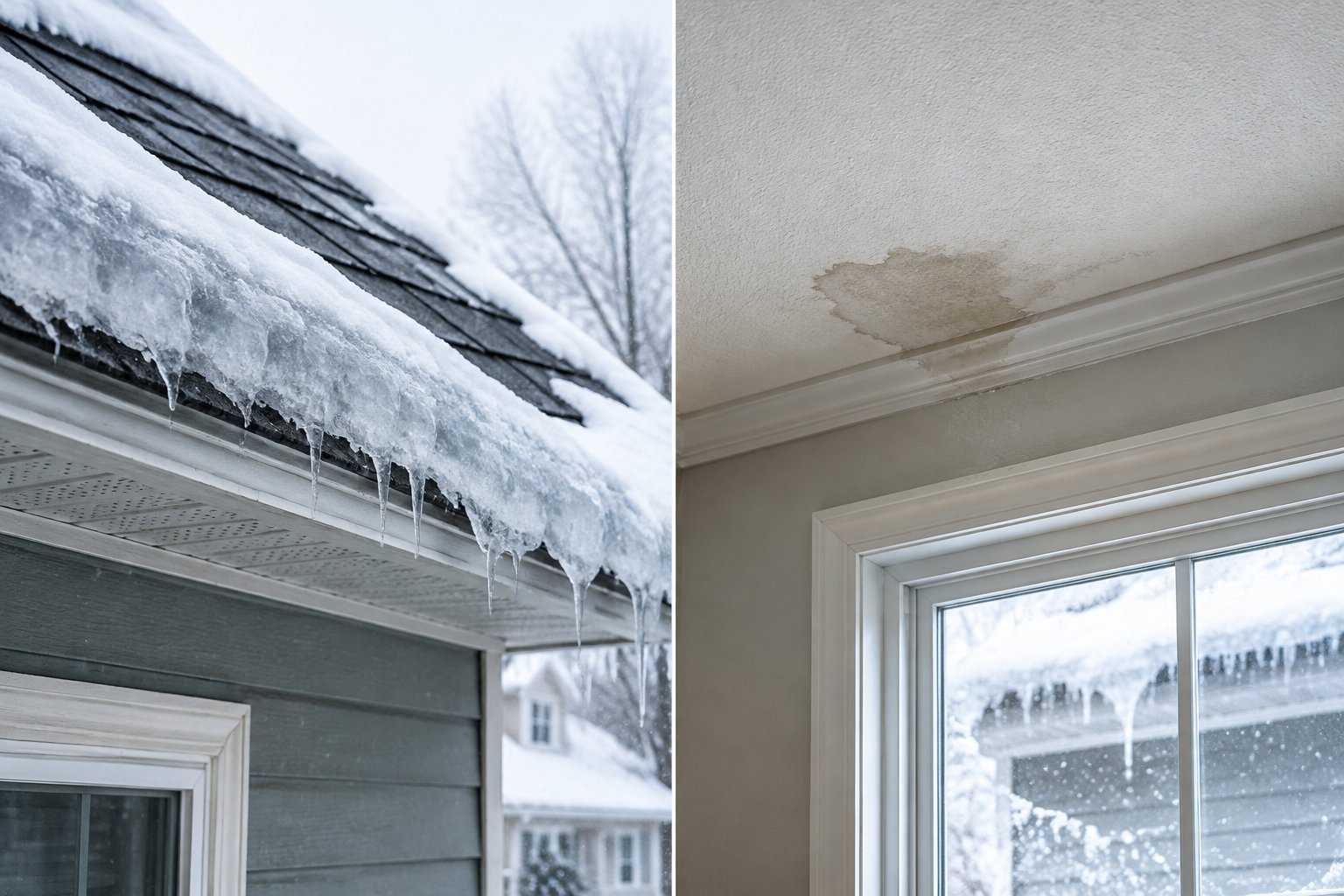
An ice dam roof leak starts when heat from your living space warms the roof, melts the snow from underneath, and the meltwater refreezes at the cold roof edge. That ridge of ice traps the next round of meltwater, which backs up under the shingles and drips into the attic, ceilings and exterior walls. Clearing snow from the ground stops the immediate problem, but only fixing the heat loss and protecting the roof edge keeps it from coming back.
Southern Maryland does not get the long, deep snow cover of New England, so ice dams here are less common. They still show up, usually after a decent snowfall followed by sunny afternoons above freezing and hard freezes at night. That freeze-thaw pattern is exactly what builds a dam, and older attics with little air sealing make it worse.
How the Dam Builds Up
The University of Missouri Extension puts it simply: nonuniform roof temperatures cause ice dams. On a typical house, it plays out like this.
- Warm air escapes into the attic through gaps around the attic hatch, recessed lights, plumbing stacks and wiring holes.
- That heat warms the roof deck above the living space, and the snow touching it starts to melt.
- Meltwater runs down the roof until it reaches the overhang, which sits outside the heated house and stays cold.
- The water refreezes there. Each melt and freeze cycle adds another layer.
- Once the ridge is tall enough, new meltwater pools behind it, works up under the shingle edges, and soaks the roof deck.
Shingles are designed to shed water running downhill. They are not designed to hold back standing water, which is why a roof in good condition can still leak behind an ice dam.
Signs You Are Dealing With an Ice Dam
Outside, from the ground: a thick band of ice along the gutters or roof edge, often with heavy icicles. Icicles alone do not mean a dam, but a solid ridge of ice with snow piled behind it usually does.
Inside: stains or bubbling paint on ceilings and upper walls along exterior walls, water at the top of window and door trim on upper floors, and drips that show up on sunny afternoons when melting speeds up.
In the attic: if you can get there safely, look with a flashlight for damp insulation or dark, wet roof sheathing near the eaves.
Timing helps separate an ice dam from other roof problems. A leak near the eaves during or just after snow, lining up with visible ice outside, points to a dam. A leak during ordinary rain with no snow on the roof points to shingle or flashing damage. Frost spread across large areas of the attic that drips on a warm day is more likely condensation from warm, moist indoor air.
Safe and Unsafe Ways to Deal With the Ice
The goal while the ice is there is to protect your home and family without damaging the roof.
Inside the House
Move furniture and electronics away from the drip, set out buckets and towels, and turn off the breaker for any light or ceiling fan near the water. A sagging ceiling is holding water, so keep everyone out from under it. Photograph the ice outside and the damage inside before cleanup.
From the Ground
A roof rake lets you pull snow off the lower few feet of the roof while standing on the ground, which removes the fuel for the dam. Work from the side, never directly under the edge, since snow and ice can slide off all at once. A common trade practice for opening a drainage channel is laying a nylon stocking filled with calcium chloride ice melt across the dam, nudged into place with the roof rake so you never leave the ground. Avoid rock salt, which is harder on roofing, gutters and plants.
What to Leave Alone
- Chipping with hammers, hatchets or ice picks. It cracks shingles and tears the layers beneath, so you trade one leak for several.
- Torches, heat guns and open flames. They scorch shingles and can start a fire in the roof or gutters.
- Climbing on the roof or setting a ladder on frozen ground. Winter roof falls are serious, and a chunk of falling ice is heavy enough to injure someone below.
Jenkins Restoration & Remodel can inspect the roof edge and plan the repair through our roofing services once conditions are safe, so nobody in your family has to take that risk.
Repairing the Roof Edge and the Damage Inside
After the thaw, have the eaves inspected. A roofer looks for lifted, cracked or curled shingles, bent drip edge, gutters pulled away from the fascia and soft spots in the roof deck near the edge. Small areas can be repaired by replacing shingles and soaked underlayment. Rotted sheathing is cut out and replaced. If the roof is already near the end of its life, a replacement may be the better investment.
Inside, ice dam water tends to run along rafters and down into exterior walls, so ceilings can look fine while the insulation above stays wet. Soaked insulation and drywall that sags or crumbles come out, the framing is dried, and new materials go back in with a stain-blocking primer before paint. If a ceiling soaked through, these first steps for drying out after water gets inside help limit the damage while you wait for the thaw.
A note on insurance. Policies can treat interior water damage, the roof itself and the cause behind the dam differently, so what gets paid for comes down to your specific policy wording and how the adjuster reads the cause. Report it promptly with your photos and receipts. Jenkins works directly with insurance companies on storm and water damage and helps document what happened.
Keeping Ice Dams From Coming Back
Long-term prevention means keeping the whole roof as cold as the eaves.
Seal Attic Air Leaks First
The Building America Solution Center, run for the U.S. Department of Energy, calls sealing all air leaks from the living space into the attic the most important step. Typical leaks are around the attic hatch, recessed lights, bath fan housings, plumbing stacks and wiring holes. Bathroom and kitchen fans should vent outdoors, never into the attic.
Add Insulation After the Leaks Are Sealed
Insulation slows heat moving through the ceiling but does little against air pouring through gaps, which is why sealing comes first. Missouri Extension recommends bringing ceiling and roof insulation up to R-38 to R-49 to cut heat loss.
Keep Air Moving Under the Roof Deck
Soffit vents at the eaves let cold air in, and ridge vents at the peak let it out, keeping the deck cool. Baffles at the eaves stop insulation from blocking the soffit vents and keep a clear channel above it.
Protect the Eaves at Your Next Roof Replacement
A self-adhered waterproof membrane, often called ice and water shield, goes on the roof deck along the eaves under the shingles. It seals around nails and keeps backed-up water out of the house if a dam does form. It can only go on when the old roofing is off, so a replacement is the time to make sure it is included. Our guide to roofing materials that handle Southern Maryland storms covers the rest of the roof system.
Heat cables along the eaves can melt channels in trouble spots, but they do nothing about the heat loss causing the dam and use electricity all winter. Treat them as a backup, not a fix.
Fix This Winter's Leak and Protect Next Winter
An ice dam leak is unsettling, but it is very fixable. Jenkins Restoration & Remodel repairs the roof edge and the ceilings and walls the water reached, and when it is time for a new roof, we install ice and water protection along the eaves so a future dam has nowhere to go. Our family-run team serves Calvert, Charles, St. Mary's, Prince George's and Anne Arundel Counties. Call (301) 884-6180 or arrange a free roof and leak estimate.
Frequently Asked Questions
Are gutters to blame for ice dams?
Not usually. Clogged gutters can add to the ice buildup along the edge, but the dam forms because the roof above is warmer than the overhang. Clean gutters in late fall all the same, so meltwater has somewhere to go.
Why do some houses on my street get ice dams and others do not?
Attic air sealing, insulation and ventilation vary widely from house to house, even among homes built at the same time. Roof shape matters too: low slopes, valleys and dormers collect snow and meltwater. A home with a well-sealed, well-vented attic can sit next to one with heavy ice dams.
Do skylights and recessed lights make ice dams worse?
They can. Older recessed lights often leak a lot of warm air into the attic, creating hot spots on the roof above. Skylights can also create warm areas and add more edges for water to find, so the roof around them deserves a close look after a dam.
Is it worth replacing a roof early to add ice and water protection?
Usually not on its own. If the roof still has good life left, sealing the attic and improving ventilation address the cause at a much lower cost. When the roof is aging anyway, adding eave protection during the replacement makes a lot of sense.
Can an ice dam damage the gutters and fascia too?
Yes. The weight of a thick ice ridge can bend gutters, pull hangers loose and stress the fascia board behind them. Have those checked during the post-thaw inspection along with the shingles.