.png)


The decision between a repair and a full roof replacement after storm damage carries real financial and insurance consequences, so it is worth getting it right before any work begins.
Homeowners in Prince George's County and Anne Arundel County face this question every year after the region's wind, hail, and heavy rain seasons. With more than 50 years of experience in storm damage restoration, Jenkins Restoration and Remodel has helped Southern Maryland homeowners navigate exactly this situation, including the insurance side.
Keep reading to learn how to recognize the signs that point toward replacement rather than repair, what a professional inspection should cover, how the insurance claim process works, and what the roofing project itself looks like from start to finish.
What Storm Damage Can Do to a Roofing System
Storm damage rarely stops at the surface. A single weather event can compromise your shingles, the underlayment beneath them, and the wood decking beneath them.
Wind Damage Beyond Missing Shingles
Missing shingles are the most visible sign of wind damage, but they are not always the most serious one. High winds can lift shingles without removing them entirely, breaking the adhesive seal along the edges. Once that seal is compromised, shingles may look intact from the ground but still allow wind-driven rain to push beneath them during the next storm.
Wind can also stress flashing around chimneys, skylights, and vents. When flashing lifts or separates, water finds a direct path into the roof deck. This kind of damage is almost impossible to spot without getting on the roof.
How Hail Affects Shingles and Underlayment
Hail leaves behind a specific pattern of damage that matters greatly for insurance purposes. Impact points knock granules loose from asphalt shingles, leaving soft, bruised spots that accelerate wear. A shingle with significant granule loss loses its UV protection and becomes brittle faster.
In larger hail events, the force of impact can crack the shingle mat itself or compress the underlayment beneath it. This type of structural bruising is not always visible without close inspection, but it shortens the life of the entire roof system even when the shingles look mostly intact.
Why Water Can Spread Past the Visible Problem
A water stain on your ceiling is not always located directly below the entry point. Water travels along roof decking, rafters, and insulation before dripping down. This means a single leak can appear in multiple interior locations at once.
The longer water sits in the decking or insulation, the more damage it causes: rot, mold, and structural softening can develop within days. Acting quickly after a storm limits how far secondary damage spreads, which also limits the scope of your insurance claim. Knowing these patterns helps you understand why an inspector looks beyond the obvious spots.
Signs a Repair May Not Be Enough
Some storm damage is localized, and a targeted repair makes good sense. Other situations call for a full replacement, and recognizing the difference early saves time, money, and future headaches.
Widespread Shingle Loss Across Multiple Slopes
When a storm strips shingles from one small section of a single slope, repair is often the right call. When the damage spans multiple roof planes or represents a large percentage of the total surface area, the math changes.
Patching a roof that has lost shingles in scattered areas across multiple slopes is difficult to do effectively, and mismatched materials can complicate future insurance claims.
Repeated Leaks and Interior Water Stains
If your roof has leaked in the same area more than once, even after repairs, that pattern points to an underlying problem that surface fixes have not solved. Repeated leaks often mean the underlayment or decking has been compromised. A second or third repair in the same spot tends to cost more than it saves over time.
Compromised Decking and Soft Spots
Soft or spongy areas when walking on the roof indicate that moisture has reached the wood decking beneath the shingles. Rotted or water-damaged decking cannot properly support a new layer of shingles, which means a partial repair will not hold up in the long term.
If the decking is compromised in multiple areas, the cost to repair the deck plus the surface materials often approaches or exceeds the cost of a full replacement.
Age and Prior Repairs That Change the Decision
Here is a practical threshold worth keeping in mind when evaluating your options:
- Roofs under 10 years old with localized damage are strong candidates for repair
- Roofs between 10 and 15 years old with moderate damage may qualify for repair depending on condition
- Roofs 15 to 20 years old with storm damage often make more financial sense as replacements
- Roofs over 20 years old are typically at or near the end of their service life; replacement is usually the better investment
A roof that has already been partially repaired multiple times is also more difficult to insure going forward. Understanding these thresholds helps you walk into an adjuster visit with realistic expectations.
What a Professional Inspection Should Cover
A professional inspection does more than confirm damage. It builds the documented record your insurance company will use to evaluate your claim, so the scope of that inspection matters.
Exterior Findings That Support a Replacement Recommendation
A thorough exterior inspection covers every slope, ridge, valley, and penetration on the roof. The inspector should document the condition of the shingles, granule loss patterns, impact damage, flashing integrity, and the condition of the gutters and fascia. Photographs taken at close range are essential, especially for hail bruising, which can be subtle.
Reputable contractors will put their findings in writing and provide a damage summary that specifies what was observed, where, and on what percentage of the total roof area. That written report is a critical document for your insurance claim.
Attic and Ventilation Issues That Affect Long-Term Performance
Many inspections stop at the exterior, but the attic tells part of the story too. Daylight showing through roof decking, staining on rafters, compressed insulation, and mold growth are all signs that storm damage has reached the structure.
Poor attic ventilation also shortens roof life by trapping heat and moisture, so an honest assessment includes whether the current ventilation setup is adequate for a new installation.
Documentation Needed for Insurance Review
Your insurance company will expect specific types of documentation to process a roof replacement claim. Most adjusters look for:
- Date-stamped photographs of all damage areas
- A written contractor inspection report with line-item damage descriptions
- Documentation of any temporary protective measures taken (such as tarping)
- Records of prior repairs, if applicable
- Weather event data confirming a storm occurred on or near the date of damage
Having this documentation ready before the adjuster visits puts you in a much stronger position and reduces the back-and-forth that slows claims down.
How the Insurance Claim Process Usually Works
Most homeowners have never filed a roof damage claim before, and the process can feel confusing. It follows a clear sequence once you know the steps.
Documenting Damage Before Temporary Protection Begins
As soon as it is safe to do so, photograph everything. Take wide shots of the full roof from the ground and close-up shots of specific damage areas if you can access them safely. Also photograph any interior damage, including stains on ceilings and wet materials. This pre-repair documentation establishes what the storm caused, separate from any pre-existing wear.
If your roof has an active opening that could let in more rain, temporary protection, such as a tarp, should be put on before the next weather event. Document the damage first, then protect it. Your policy requires you to take reasonable steps to prevent further loss.
What to Expect During the Adjuster Visit
Your insurance company will send an adjuster to evaluate the damage in person. This visit typically happens within a few days to a couple of weeks after you file your claim. Having a contractor or their written report present during the adjuster's visit helps ensure the inspector sees all documented damage, not just the most obvious items.
The adjuster will assess the damage, take their own photographs, and prepare an estimate called a scope of loss. This document outlines what repairs or replacements the insurer is willing to cover.
Reviewing the Scope of Loss and Settlement Details
When you receive the scope of loss, review it carefully against your contractor's inspection findings. Discrepancies between the two documents are common and do not always reflect bad faith on either side. They often reflect different methods of measurement or missed items that were not visible during the adjuster's walk.
If the contractor's assessment includes items outside the scope of loss, your contractor can submit a supplement request with supporting documentation. This process takes additional time, but it helps ensure covered work is not left out of the settlement. Understanding this step prevents you from accepting a payout that does not cover the full scope of repairs needed.
What to Expect During the Roofing Project
Once your claim is approved and you are ready to move forward, the roofing project itself follows a clear sequence.
Material Selection and Scope Approval
Before any work begins, you will choose your roofing materials. For most residential projects in Southern Maryland, the options include standard three-tab asphalt shingles, architectural (dimensional) shingles, and impact-resistant shingles, which may qualify for an insurance discount.
Your contractor should review the approved insurance scope with you at this stage so the materials selected are consistent with what your insurer has agreed to cover.
Tear-Off, Deck Repairs, and Installation Steps
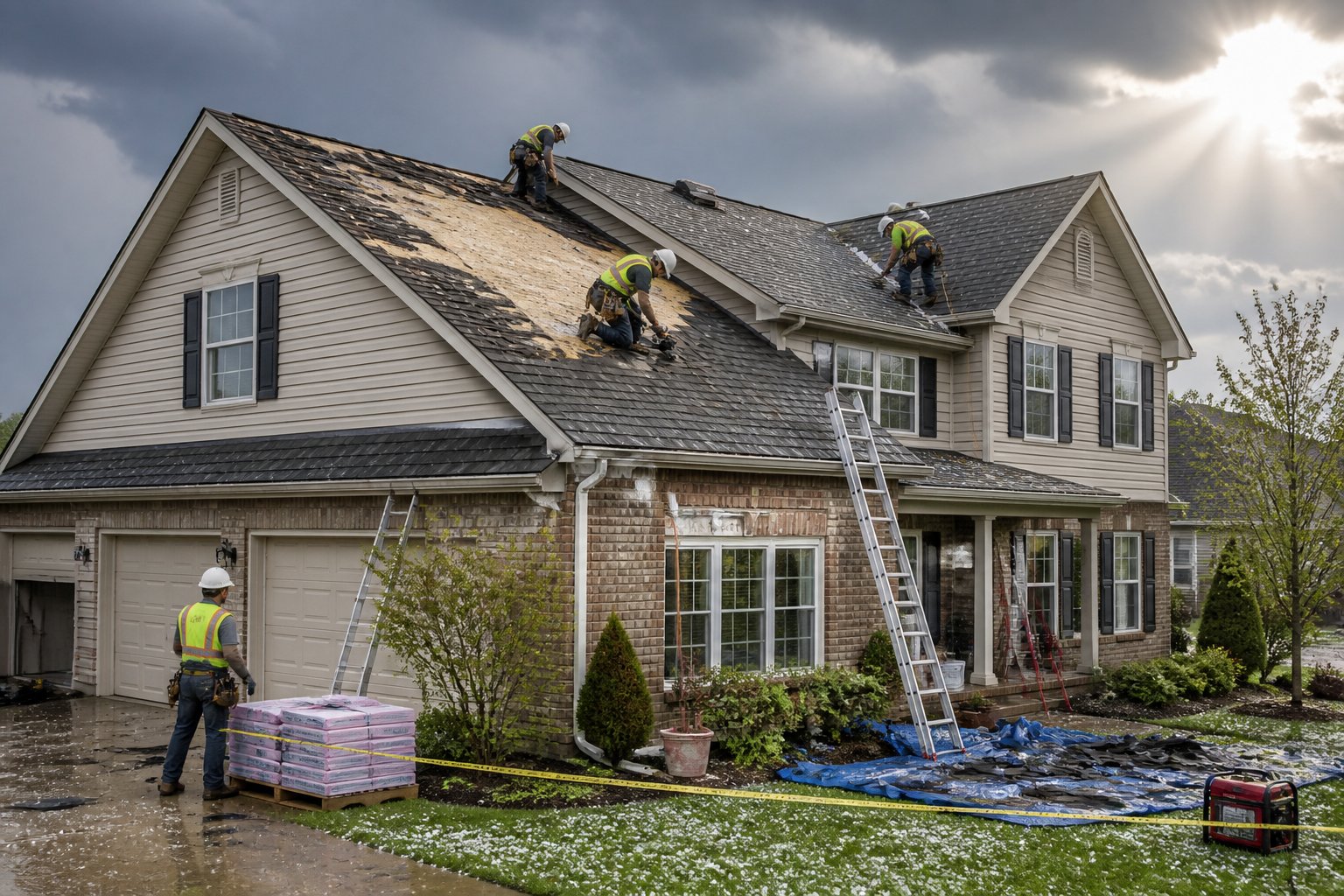
A full replacement starts with removing the old shingles and underlayment down to the bare decking. Once the deck is exposed, the crew inspects it directly and replaces any damaged or soft sections before anything goes back on top. New underlayment is installed first, followed by drip edge, ice and water shield at the eaves, and then the shingle installation working from the bottom up.
Flashing is replaced or resealed around all penetrations, chimneys, and valleys. This step is where much of the long-term performance is determined, since improperly installed flashing is one of the most common causes of post-replacement leaks.
Final Walkthrough and Warranty Paperwork
After installation, your contractor should do a detailed walkthrough with you and provide written documentation that includes the materials used, installation warranty details, and any manufacturer warranty registration information.
You will also need a completion certificate or similar document for your insurance company to release the final portion of your claim payment if your settlement was structured in two parts.
Choosing the Next Step With Confidence
Feeling confident about a major roofing decision comes from asking the right questions before any work is authorized, not after.
Questions to Ask Before Authorizing Work
Before you sign a contract, get clear answers to these:
- Is the contractor licensed and insured to work in Maryland?
- Will they provide a written inspection report, not just a verbal summary?
- Do they have experience working directly with insurance adjusters on storm claims?
- Can they provide local references for similar storm-damage projects?
- What does their supplementing process look like if the scope of loss is incomplete?
These are not trick questions. Any experienced contractor will answer them without hesitation. If answers are vague or a contractor pressures you to sign before you have reviewed their inspection findings, that is a sign to pause.
When to Schedule a Local Storm Damage Assessment
If a significant storm has passed through Prince George's County or Anne Arundel County, the window to document damage and file a claim is not unlimited. Most homeowners insurance policies have deadlines for filing storm-related claims, and waiting too long can complicate your case.
Scheduling a professional assessment soon after the storm, even before you are sure whether damage is serious, is always the right move. An honest inspection will tell you what you are actually dealing with, and that information costs you nothing compared to the risk of waiting.
Frequently Asked Questions
How Can I Tell if My Roof Damage Is Serious Enough to Need a Full Replacement?
Look for widespread shingle loss across multiple slopes, soft spots in the decking, repeated leaks in the same area, and a roof that is 15 to 20 years old or older. Any one of these factors can tip the decision toward replacement, and a combination of them almost always does.
What Should I Do Right After a Storm to Protect My Home Before Repairs Start?
Photograph all visible damage as soon as it is safe, then use a tarp to cover any open areas before the next rain event. Report the damage to your insurance company promptly, since many policies require timely notice of a covered loss.
How Long Do I Have to File a Roof Damage Claim After a Storm in My Area?
Most homeowners insurance policies in Maryland require you to file within one to two years of the damage event, but some carriers have shorter windows. Check your specific policy language and contact your insurer soon after the storm to avoid any timing issues.
What Should I Avoid Saying or Doing When the Insurance Adjuster Comes Out?
Do not describe the damage as pre-existing or minimize what the storm caused, even casually. Let your contractor's written inspection report do the talking, and avoid agreeing to or signing anything during the adjuster's visit before you have fully reviewed the scope of loss.
What Roof Damage Typically Qualifies for an Insurance-Paid Replacement Versus a Repair?
Insurance companies generally approve replacement when storm-related damage affects a significant portion of the roof surface, when the existing materials cannot be matched for a repair, or when the damage has compromised the structural layer beneath the shingles. A well-documented contractor's report identifying the cause and extent of the damage is the strongest support for approval of a replacement.
What Is the Roofing 25% Rule, and How Can It Affect My Claim and Repair Plan?
Some building codes require that if more than 25% of a roof is being repaired or replaced, the entire roofing system must be brought up to current code standards. This can affect the total cost of your project and what your insurance company is asked to cover, so it is important to clarify with your contractor whether local code requirements apply to your situation before work begins.
Take the Next Step With a Contractor You Can Trust
Knowing whether your roof needs a repair or a full replacement comes down to having accurate information, not guesswork. The signs outlined in this guide, including decking condition, shingle loss patterns, age thresholds, and prior leak history, give you a real framework for that conversation. The insurance process adds another layer, but it follows a logical sequence once you understand the steps.
Jenkins Restoration and Remodel has helped Southern Maryland homeowners navigate storm damage assessments, insurance claims, and roof replacements for over 50 years. The team serves Prince George's County and Anne Arundel County and handles both the contractor and insurance coordination sides of the project under one roof.
Get in touch to schedule your storm damage assessment and get a clear picture of what your roof actually needs before any decisions are made.