Knowing how to get smoke smell out of house air and materials comes down to one idea: the smell lives in residue, so you have to remove or seal the residue. Fresh air and filtration clear what is floating around, washing pulls odor out of surfaces and fabrics, and anything that soaked up heavy smoke has to be sealed or replaced. Sprays and candles only cover it up for a few hours.
Southern Maryland summers make this harder. Smoke odor that seemed gone in February often comes back on the first humid July afternoon, because heat and moisture coax trapped residue back into the air. If that has happened in your home, the source is still there.
Start by Matching the Smell to Its Source
Where the smoke came from tells you how deep it went and how much of the work you can handle yourself.
A burnt dinner leaves odor mostly in the air and on nearby surfaces. A fire that burned plastics or furniture pushes hot, oily smoke into every crack and cavity it can reach, including places you cannot see or wash.
Clear the Air Before You Clean Anything
Moving smoky air out of the house stops it from settling into more of your belongings.
If outdoor air is clean, open windows on opposite sides of the house and set a box fan in one of them blowing outward. Run your kitchen and bathroom exhaust fans at the same time. That cross flow empties a room far faster than one open window.
During a wildfire smoke event, do the opposite. The EPA advises keeping windows and doors closed, setting your system to recirculate, and using a high-efficiency filter such as MERV 13, or the highest rating your system can handle, in its guidance on wildfires and indoor air quality. Air the house out once outdoor air improves.
While you work, get rid of anything that keeps feeding the smell: ashtrays, burnt cookware, a scorched cushion. One smoky rug in a closed room can undo a whole weekend of cleaning. After a house fire, photograph those items before they go to the curb, since your adjuster may want to see them.
Wash the Odor Out of Hard Surfaces
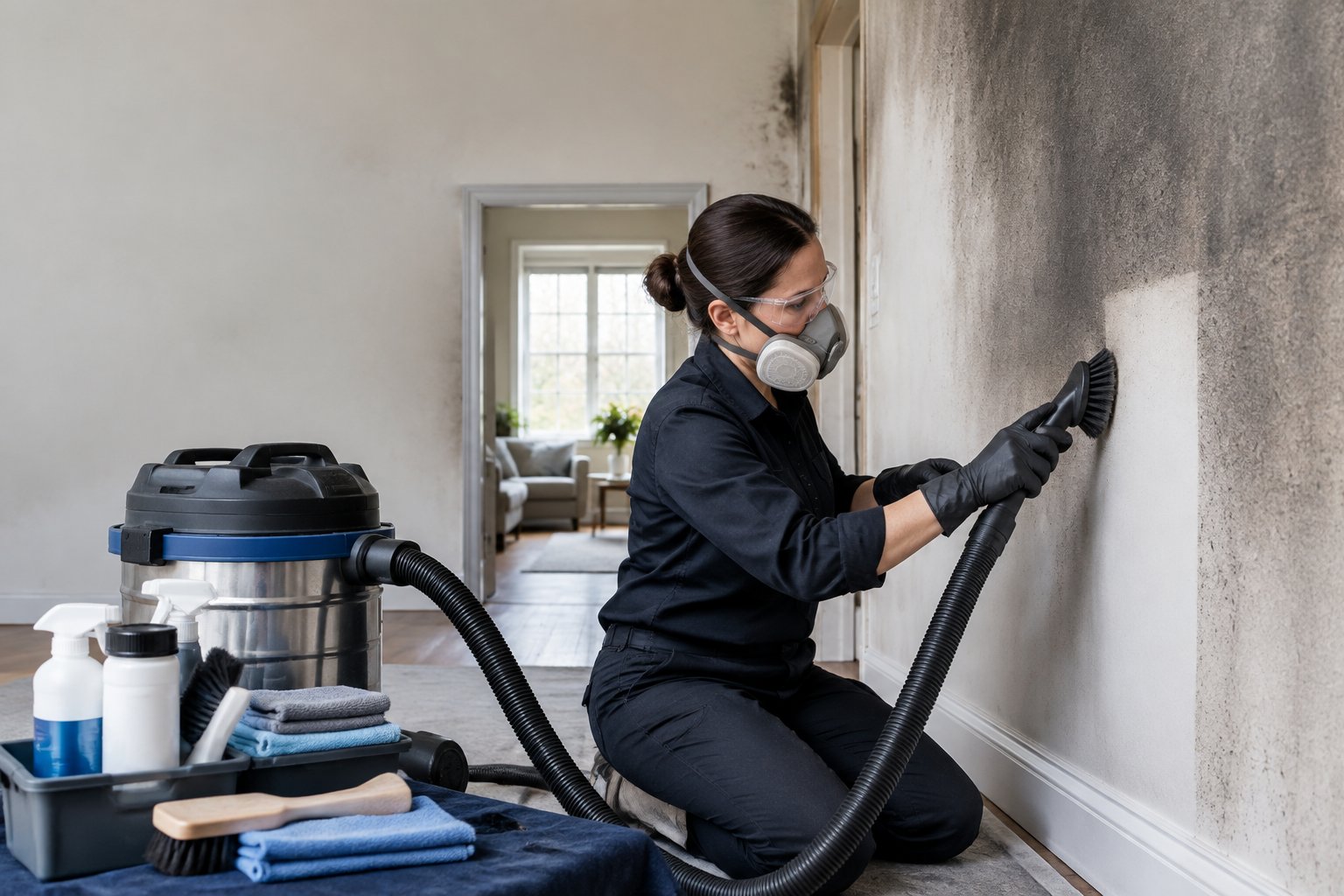
Smoke leaves a thin, sticky film on walls, ceilings, cabinets and trim, and that film is what you smell. Removing it is the single biggest step you can take.
For light odor, warm water with a mild dish detergent works on most painted walls and sealed cabinets. Nicotine film from years of smoking usually needs a degreasing cleaner. Wear gloves, keep air moving, and rinse with clean water afterward so the cleaner does not leave its own residue.
Work small sections and change your water often. Do not forget the spots that hold odor and get missed:
- Inside cabinets, drawers and closets
- Tops of doors, door frames and window trim
- Blinds, light fixtures and ceiling fan blades
- Behind and under the refrigerator and stove
If you can see black or gray soot on a surface, treat that as a separate job. Wet wiping smears soot into paint, so it needs dry removal first.
Get Smoke Out of Fabrics, Carpet and Furniture
Fabric acts like a filter, so it traps a lot of odor.
Wash curtains, bedding, pillow covers and pet beds, and let them air dry or check them for odor before they go in the dryer. Dryer heat can set the smell. Send delicate items to a dry cleaner and tell them it is smoke odor.
Carpet and upholstery respond well to hot water extraction, which reaches far deeper than vacuuming. Baking soda left overnight on carpet or a mattress, then vacuumed up, pulls out some leftover odor. Carpet padding is the weak spot: once it soaks up heavy smoke, cleaning rarely reaches it, and replacing the pad is often the only fix.
Treat the HVAC System as Part of the House
Your heating and cooling system can keep spreading smoke long after the rooms are clean. Every time the blower runs, it pulls air across a dirty filter and through dusty ducts.
Swap the filter as soon as the smoke clears, then again a few weeks later. Pull the vent covers, wash them, and vacuum as far into each opening as you can reach. Then run the system and walk the house. If one room smells smoky only when the air kicks on, residue is sitting deeper in that duct run, and a licensed HVAC contractor should inspect and clean it.
Know Which Odor Fixes Remove and Which Only Mask
A lot of products promise to eliminate smoke odor. Only some of them touch the cause.
- Remove odor: washing surfaces, laundering fabrics, extraction cleaning carpet, replacing filters, and replacing materials that cannot be cleaned.
- Capture odor in the air: an air purifier with both a HEPA filter for fine particles and an activated carbon filter for odor gases. Carbon fills up over time, so replace it when the smell creeps back.
- Absorb a little odor: activated charcoal bags and open boxes of baking soda. They help with a faint leftover smell in closets and small rooms, but they cannot draw residue out of a wall.
- Mask odor: plug-ins, scented candles, sprays and bowls of coffee grounds. Once the fragrance fades, the smoke is still there.
When the Smell Keeps Coming Back
If you have washed every surface and the odor returns days later, the source is hidden. Common hiding places are attic insulation, the wall cavities behind drywall, subflooring under carpet, and ductwork. Smoke rises, so attics catch a lot of it after a fire on a lower floor.
Warning signs include odor that gets stronger on hot or humid days, smoke smell near outlets and switch plates, and yellow or brown stains bleeding through fresh paint. At that point more scrubbing will not help. The materials holding the odor need professional treatment, and the team at Jenkins Restoration & Remodel can trace where the smoke traveled and handle the smoke and fire damage restoration your home needs.
How Professionals Neutralize Deep Smoke Odor
Once residue is cleaned off or the damaged materials are out, restoration crews have a few tools for odor left in the structure.
Thermal fogging heats a deodorizer into a fine fog that follows the same paths smoke took into cracks and porous materials. The house is empty during treatment, and pilot lights and open flames are off.
Ozone treatment breaks down odor molecules, but ozone also harms lungs. The EPA notes that no federal agency has approved ozone generators sold as air cleaners for use in occupied spaces, and that ozone can be harmful to health, in its review of ozone generators. Treat ozone as a tool for trained crews in an empty house, with people, pets and plants out until it has aired out.
Hydroxyl generators work more slowly and are generally used while a home is occupied.
Sealing primer finishes the job on walls and ceilings. A stain-blocking, odor-sealing primer locks in any residue left in the surface so it cannot off-gas or bleed through new paint. Regular paint alone does not hold smoke odor back. Insulation, padding and drywall that soaked up heavy smoke usually come out and get replaced rather than sealed.
None of these work on dirty surfaces. Cleaning always comes first.
When Smoke Odor Is Part of an Insurance Claim
If the smell came from a fire in your home, call your insurer before you throw anything away or start heavy cleaning. Take photos and video of every room, including closets and the attic if you can reach it safely. Adjusters often want to see damage before it is cleaned up, and coverage for odor treatment depends on your policy.
A professional walkthrough gives the adjuster a clear record of where smoke went. This overview of what to expect during a fire damage home assessment shows what that visit covers, and the fire damage restoration process explains what happens after it.
Breathe Easy at Home Again
Lingering smoke odor usually means residue is still hiding somewhere, and finding it is what ends the smell for good. Jenkins Restoration & Remodel restores homes damaged by fire and smoke across Prince George's, Anne Arundel, Charles, Calvert and St. Mary's Counties, from cleaning and sealing to replacing what cannot be saved. We work directly with your insurance company and help document the damage for your adjuster. Call (301) 884-6180 or schedule a free smoke damage estimate whenever you are ready.
Frequently Asked Questions
Is it safe to sleep in a house that smells like smoke?
A faint cooking smell is not usually a concern, but heavy smoke odor after a fire means fine particles may still be in the air and on surfaces. Children, older adults and anyone with asthma or heart or lung conditions are the most sensitive. If the fire was more than a small pan fire, wait until the house has been cleaned and the HVAC filter changed.
Does painting over walls get rid of smoke smell?
Not on its own, and any sealer is only as good as the cleaning underneath it. Shellac-based and oil-based stain blockers are the usual choice for heavy smoke odor because they hold it back better than most water-based primers, though they need good ventilation while they cure. Treat the ceilings too, since smoke collects there first.
How long should I run an air purifier after smoke exposure?
Run it on high in the worst room while you clean and keep it running for several days afterward, then move it to the next room. Check the size rating against the room, since an undersized unit barely moves the air, and keep that room's door closed so the purifier is not trying to clean the whole house.
What should I do with food after a house fire?
Throw out any food that was exposed to heat, smoke or soot, including canned goods that got hot and anything in the refrigerator if the power went out. Smoke can reach food through packaging that looks fine. Photograph what you discard first, since some policies cover spoiled or damaged food.
Should I replace my HVAC system after a house fire?
Usually not. Most systems need cleaning, new filters and an inspection rather than replacement. A licensed HVAC contractor can tell you whether any components took heat or smoke damage that cleaning will not fix.