.png)


Your siding takes a beating in Southern Maryland. Between summer humidity, seasonal storms, and the occasional nor'easter pushing through Prince George's and Anne Arundel County, exterior cladding works hard every single day. When you start noticing cracks, warping, or panels that simply blew off in the last storm, the question stops being "should I replace it?" and starts being "what do I replace it with?"
Choosing the right siding material is one of the most durable decisions you can make for your home's exterior, and getting it wrong can cost more than the original installation. Vinyl and fiber cement are the two dominant options for Southern Maryland homeowners, and each performs differently depending on your home's exposure to moisture, wind, and heat.
Keep reading to learn when replacement makes sense over repair, how vinyl and fiber cement compare across the factors that matter most in this climate, and what the installation process actually looks like from start to finish.
When New Exterior Cladding Makes Sense
You'll know it's time to replace your siding when problems stop being isolated and start showing up in multiple places across the exterior. Patching a few panels is one thing. Replacing the same section every couple of years, or finding soft spots behind the wall, signals that the material itself has run its course.
Common Signs of Wear, Moisture, and Age
Aging siding sends clear signals if you know what to look for. Fading and chalking are cosmetic, but warping, buckling, and panels that no longer sit flush against the wall suggest moisture has gotten behind the cladding. Once water enters the wall assembly, you risk damage to the sheathing, insulation, and framing beneath.
Watch for these signs that point toward replacement rather than repair:
- Soft or spongy wall sections when you press firmly on panels
- Visible mold or mildew that keeps returning after cleaning
- Paint that peels repeatedly in the same spots
- Panels that crack, split, or crumble rather than flex
- Higher energy bills without an obvious cause
If you're seeing two or more of these at the same time, a professional inspection will likely confirm that patching is no longer the practical choice. The cost of repeated repairs adds up quickly, and a new installation gives you a fresh wall system with a proper moisture barrier underneath.
How Storm Damage Changes the Decision
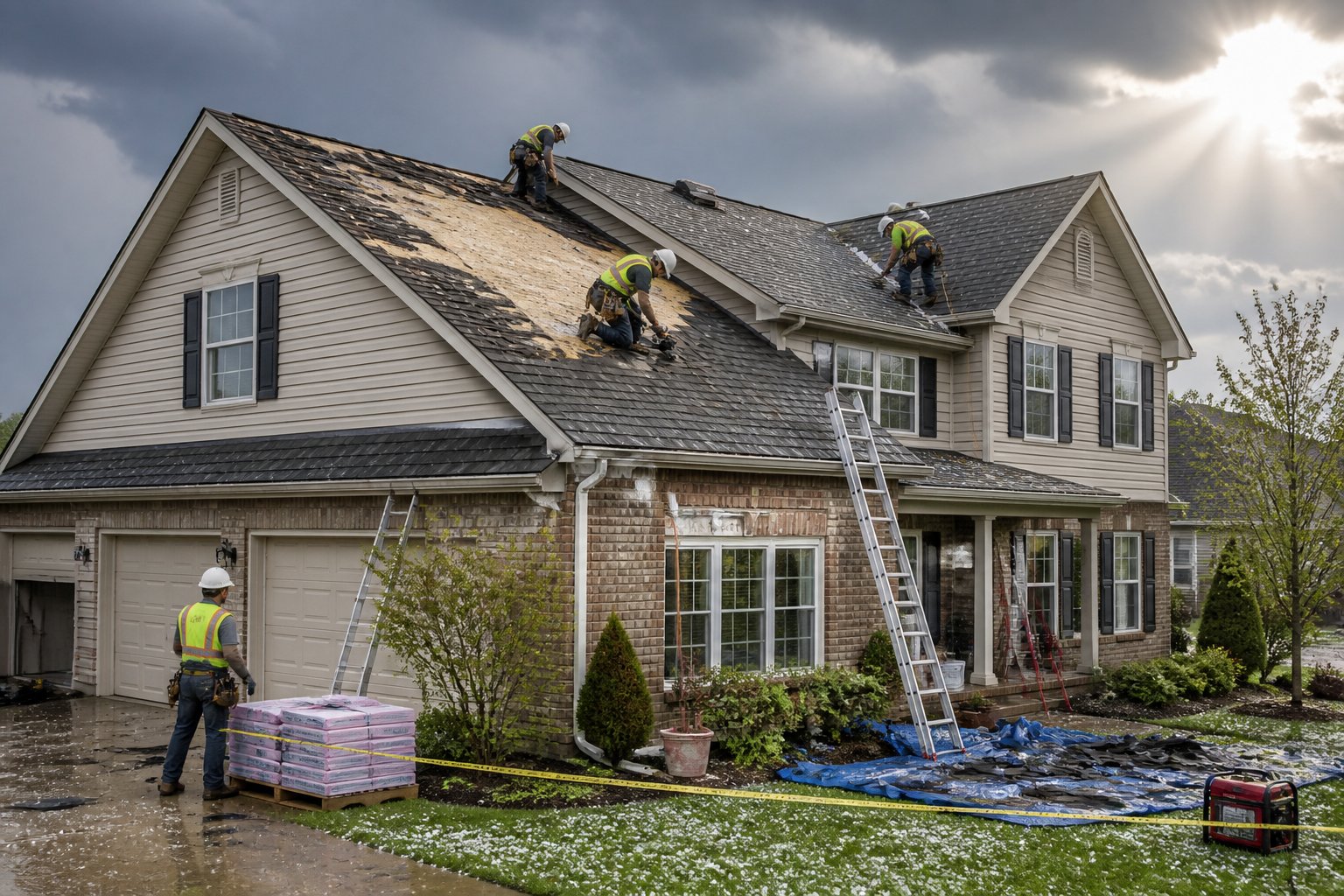
Storm damage shifts the math in a way that wear and age do not. A single severe storm can crack vinyl across an entire elevation, dent fiber cement panels, or drive water behind siding in ways that aren't visible from the street. What looks like surface-level cosmetic damage often indicates hidden moisture intrusion that needs to be addressed before it reaches the wall cavity.
The age of your existing siding matters here, too. If your current cladding is already 20 or 25 years old and a storm takes out a significant portion of it, matching replacement panels becomes difficult, and the remaining material may not have much life left. At that point, a full exterior replacement often makes more financial sense, especially if your homeowner's insurance policy covers the damage.
Knowing when storm damage warrants a full replacement rather than a targeted fix requires a professional assessment, which raises the next question most homeowners face: repair or replace?
Repair or Full Replacement After a Storm
Not every storm hit requires tearing off the entire exterior. The scope of the damage and the condition of the surrounding material are what actually drive that decision.
Damage That Can Often Be Fixed
Localized damage affecting one wall or a small cluster of panels is usually repairable without a full replacement. A handful of cracked or missing vinyl planks, a small section of dented fiber cement, or minor gaps at trim joints are all candidates for targeted repair when the rest of the siding is in solid condition.
Repairs work best when the damage is clearly bounded, the existing material is less than 15 years old, and the wall behind the panels shows no signs of moisture penetration. A good contractor will check the sheathing and house wrap during any repair, not just swap out the visible panel.
Damage Patterns That Point to a Larger Project
Widespread damage across multiple elevations, panels that are cracked in patterns rather than isolated spots, or water staining that runs down interior walls are signs that a partial repair won't solve the underlying problem. Hail damage, in particular, tends to be distributed across the entire surface exposed to the storm, meaning a full replacement is often the cleaner outcome.
Insurance claims for storm-damaged siding frequently cover full replacement when the damage is extensive enough that a reasonable match to existing panels is not achievable. A contractor who understands the insurance process can accurately document the scope of work and work with your adjuster to ensure the claim reflects the true extent of the damage.
Once you've determined that replacement is the right move, the next step is picking the material that will actually hold up in this climate.
Vinyl and Fiber Cement Compared
Vinyl and fiber cement are the two materials most Southern Maryland homeowners choose for good reason. Both offer durability and low maintenance compared to wood, but they perform differently depending on your priorities.
Durability in Humid Weather and Coastal Storms
Southern Maryland's climate is genuinely demanding. High humidity from late spring through early fall, combined with periodic tropical storms and strong wind events, means your siding is under moisture pressure for several months each year. Both vinyl and fiber cement hold up better than wood in these conditions, but in different ways.
Vinyl is moisture-proof by nature since it doesn't absorb water. It won't rot, and it doesn't need painting to maintain its protective barrier. The trade-off is that vinyl can become brittle in extreme cold and is more vulnerable to impact damage from hail or wind-driven debris. High winds can also cause vinyl panels to flex or detach if they aren't installed with the correct fastening pattern.
Fiber cement is denser and heavier, which makes it more resistant to impact and wind uplift. It handles hail better than vinyl in most cases and holds its shape under temperature swings. It does absorb some moisture at cut edges if those edges aren't properly primed and sealed, which is why installation quality matters as much as material choice.
Maintenance, Appearance, and Long-Term Upkeep
Vinyl's biggest advantage is that it needs very little attention over its lifespan. You wash it down occasionally, and the color is part of the material rather than a surface coat, so it won't chip or peel. The limitation is that vinyl color options tend to look uniform, and the material can look noticeably plastic when viewed up close in higher-end homes.
Fiber cement accepts paint and can be factory-primed or pre-painted in a wide range of colors. It can be manufactured to closely mimic the textures of wood lap siding, shingles, or board-and-batten, giving it greater design flexibility for homes where curb appeal matters.
The maintenance trade-off is that fiber cement will need repainting every 10 to 15 years, depending on sun and moisture exposure.
Budget Considerations and Value Over Time
Vinyl costs less upfront. Installed project costs for vinyl typically run lower per square foot than fiber cement, making it the more accessible choice when budget is tight or when you're replacing siding after a storm and working within an insurance settlement. For a mid-sized home, the difference between a vinyl and fiber cement project can run into the thousands of dollars.
Fiber cement has higher material and labor costs because the panels are heavier and require more precise cutting and sealing. The return on that investment tends to show up in resale value and longevity. Fiber cement is generally expected to last longer than vinyl under demanding conditions, and it often adds more perceived value to the home at the point of sale.
The right choice isn't the same for every home, and it starts with understanding what your specific property is exposed to.
What Southern Maryland Homeowners Should Weigh
Southern Maryland's conditions narrow the material decision in specific ways that a contractor unfamiliar with the region might not flag.
Moisture Exposure in Prince George's County and Anne Arundel County
Homes in Prince George's County and Anne Arundel County face a combination of inland heat and bay-influenced humidity that keeps moisture levels elevated for long stretches. Anne Arundel properties near the Chesapeake Bay shoreline or tidal tributaries add salt air into the equation, which accelerates corrosion on metal fasteners and can affect certain siding finishes over time.
For coastal and near-water properties, fiber cement with a factory-applied finish and stainless or hot-dip galvanized fasteners offers a more durable, long-term system. Vinyl remains a strong choice for inland properties where the primary concern is humidity rather than salt exposure. In both cases, the house wrap or weather-resistant barrier installed beneath the siding is critical to keeping moisture out of the wall cavity.
Matching the Home's Style and Existing Exterior
Material choice doesn't happen in isolation. The siding you choose needs to work with the existing roofline, trim color, window profiles, and overall architectural style of the home. A traditional colonial in a Prince George's County neighborhood will read differently with fiber-cement lap siding than with smooth vinyl panels, and the same is true in reverse for a more contemporary home.
If you're replacing only part of the exterior, matching the existing profile and texture becomes a practical constraint that may influence which material is realistic. Your contractor should walk you through available profiles in your chosen material and show you how they'll integrate with what's staying in place.
Once you've landed on a material direction, it helps to know what the actual project looks like from the first visit through the final walkthrough.
What to Expect During the Project
A siding replacement moves through clear phases, and knowing what happens at each one keeps you from being caught off guard.
Inspection, Material Selection, and Scope Review
The project begins with a thorough exterior inspection to document the condition of the existing siding, identify any hidden moisture damage, and confirm the full scope of the replacement. This step matters more than many homeowners expect. What's visible from the driveway doesn't always tell the full story, and a proper scope review prevents surprises mid-project.
If the replacement is tied to an insurance claim, this is also the stage when damage documentation is prepared in a format the adjuster will need to see. A contractor experienced in insurance restoration will know how to photograph, measure, and describe the damage in terms that support an accurate claim settlement.
Removing Old Panels and Checking the Wall Beneath
Once the scope is confirmed and materials are ordered, the crew removes the existing siding down to the sheathing. This is the moment when hidden problems become visible. Soft or deteriorated sheathing, failed house wrap, or areas of mold growth behind the panels all need to be addressed before new siding goes up.
Skipping or rushing this phase is the most common cause of siding failures within the first few years after installation. Quality craftsmanship at this stage means taking the time to repair what's underneath before covering it back up.
Installation Details That Protect Against Water Intrusion
New siding goes over a fresh layer of house wrap or weather-resistant barrier, which is the primary defense against water infiltration at windows, doors, and penetrations. Flashing at horizontal joints, kick-out flashing at roofline intersections, and proper caulking at trim transitions are all details that matter enormously for long-term performance in Southern Maryland's wet seasons.
Panels are fastened according to the manufacturer's specifications for wind zone and climate, which affects both the nail spacing and the amount of movement allowance left for thermal expansion. Vinyl especially needs room to expand and contract without buckling, and that dimension requires careful installation rather than simply nailing panels tight.
Choosing the Next Step With Confidence
Feeling confident before you pick up the phone makes the conversation with the contractor more productive for both sides.
Questions to Ask Before You Schedule an Estimate
A few targeted questions will tell you a lot about whether a contractor is the right fit for your project:
- Do you handle the insurance claim documentation for storm-related damage?
- What house wrap or weather-resistant barrier do you install under the new siding?
- How do you handle sheathing repairs discovered after the old siding is removed?
- Can you show me examples of vinyl and fiber cement work on similar homes in the area?
- What does your warranty cover, and for how long?
- How do you address color or profile matching if only part of the exterior is being replaced?
These questions go beyond the surface-level price quote to the preparation and installation practices that determine how well your new siding actually performs.
Frequently Asked Questions
How do I Know Whether My Home Needs a Full Siding Replacement or Just a Targeted Repair?
The extent and distribution of the damage is the deciding factor. Isolated damage to one wall or a small number of panels is usually repairable, but widespread cracking, warping across multiple elevations, or evidence of moisture behind the panels typically indicates full replacement. A professional inspection is the most reliable way to determine which path applies to your home.
What Should I Expect to Pay to Replace Siding on an Average-Sized Home, Including Labor and Disposal?
Installed costs vary by material and home size, but vinyl siding replacement on a mid-sized home generally runs $7,000 to $17,000, while fiber cement projects typically fall between $12,000 and $22,000, or higher, depending on complexity and scope. These ranges reflect 2026 market pricing and may vary based on sheathing repairs, profile selection, and labor costs in your area. A written estimate after an in-person inspection will give you the most accurate figure.
How Long Does a Typical Siding Replacement Take, and What Parts of the Home Will Be Disrupted?
Most residential siding replacements take between three and seven days for a standard-sized home, though larger projects or those with significant hidden repairs can extend that timeline. The exterior of the home will be the primary work area, and you should expect some noise, debris collection around the perimeter, and temporary disruption to outdoor spaces near the work zone. Interior disruption is minimal in most cases.
Which Siding Material Holds Up Best for Moisture, Heat, and Storms in My Area: Vinyl, Fiber Cement, Wood, or Engineered Wood?
For Southern Maryland's combination of humidity, seasonal storms, and temperature swings, vinyl and fiber cement are the two most practical choices for most homeowners. Fiber cement offers stronger impact resistance and better performance near tidal or coastal areas where salt air is a factor, while vinyl provides a lower-cost, moisture-proof option that works well for inland properties.
Wood and engineered wood can work in this climate but require more active maintenance to prevent moisture-related deterioration.
Can You Match My Existing Siding Color and Profile so the Finished Look Stays Seamless?
Matching is possible when the existing material is still available in the same profile and color line, but it becomes more difficult as siding ages and product lines change. Your contractor should assess the existing material during the inspection to determine whether a close match is achievable or whether full replacement of the affected elevation is the more practical solution to achieve a consistent finished appearance.
What Does a Quality Siding Replacement Estimate Include, and What Details Should I Look for Before I Sign?
A thorough estimate should itemize material costs, labor, house wrap replacement, disposal of old material, and any sheathing or trim repairs. Look for specifics on the brand and product line being installed, the fastener type, and how window and door penetrations will be flashed. An estimate that lists only a total price without line-item details makes it difficult to compare bids or understand what's actually included in the scope of work.
Lead with relief, end with credentials
You don't have to figure out the adjuster conversation on your own. Schedule a free consultation with Jenkins Restoration & Remodel and leave with a clear plan before a single shingle comes off.
We've been guiding Southern Maryland homeowners through insurance claims and siding restoration in Prince George's and Anne Arundel County for over 50 years.