Fire Damage Restoration Services: What Happens Before Repairs Begin
Jenkins Restoration and Remodel
The fire trucks have pulled away. The smoke has thinned. You are standing outside your home, looking at scorched walls, broken windows, and water-soaked floors, and you have no idea what will happen next. That moment, right after a fire, is one of the most disorienting experiences a homeowner can face. The damage is visible, but the path forward is not.
What most homeowners do not realize is that fire damage restoration is not a single event. It is a structured process with several steps that must happen before any real repairs can begin. Skipping or rushing those early steps can lead to hidden damage, failed repairs, and insurance claim problems down the road.
Keep reading to learn what a professional fire damage assessment actually covers, why repairs cannot start the same day as cleanup, and how the full restoration process unfolds from first call through final walkthrough. This guide is written for homeowners in Southern Maryland who need straight answers, not jargon.
What to Do Right After a Fire or Smoke Event
The first hours after a fire matter more than most people expect. Acting carefully during this window protects your safety, your home, and your ability to file an insurance claim.
Safety, Entry, and Immediate Documentation
Do not enter your home until the fire department or a licensed professional has confirmed it is structurally safe. Fires can weaken floors, ceilings, and load-bearing walls in ways that are not visible from the doorway. Even a small kitchen fire can compromise nearby framing if the heat was intense enough.
Once entry is cleared, document everything before anything is moved or cleaned. Use your phone to take photos and video of every room, including areas that appear undamaged. Soot, water stains, and smoke residue on walls or ceilings serve as evidence for your insurance claim, and you want that record intact.
Secure the property as quickly as possible. Broken windows and open roof sections need to be boarded or tarped immediately to prevent further weather damage, vandalism, or moisture intrusion. This step is often called emergency stabilization, and it protects your claim from being disputed over secondary damage that occurred after the fire.
When to Call Your Insurance Carrier
Call your insurance carrier the same day, even if you are still processing what happened. Most policies have notification requirements, and waiting can create complications with your claim.
Have your policy number ready, and write down the name and contact information of every person you speak with. Ask your carrier what documentation they need, whether they are sending an adjuster, and what the expected timeline looks like. Your carrier may also ask whether you have taken steps to secure the property.
This early call sets the paperwork in motion. Once that process starts, the next critical step is getting a professional damage assessment completed so the scope of repairs can be documented accurately.
Read more: Water Damage Insurance Claims Guidance for Faster Payouts
What a Professional Damage Assessment Covers
A professional fire damage assessment goes well beyond a visual walk-through of the burned areas. It is a systematic inspection that captures the full scope of damage throughout the structure, not just in the rooms where flames were visible.
Structural Conditions and Safety Concerns
A trained assessor evaluates whether the building is safe to occupy or work in. This includes checking load-bearing walls, floor joists, roof rafters, and any framing near the fire origin. Heat can weaken structural members even when they do not appear burned, and an experienced eye knows where to look.
The inspector also checks the foundation, the electrical panel, and any gas lines near the affected area. These systems must be evaluated before any crews enter to begin cleanup work. In Southern Maryland homes, where basements and older construction are common, this step can uncover issues that are not obvious from the main floor.
Smoke, Soot, and Water Exposure Mapping
Smoke travels far beyond the fire zone. A thorough assessment maps exactly where smoke, soot, and fire-suppressant water have penetrated, often including rooms on the opposite side of the house from the fire itself.
Soot etches glass and corrodes metal quickly. Smoke penetrates insulation, drywall cavities, and HVAC ducts. Accurately mapping this spread ensures the restoration scope covers everything that needs attention, not just what is visibly charred. Incomplete mapping is one of the most common reasons fire restorations require additional work after the initial repair phase.
Contents, Odor, and Hidden Damage Findings
The assessment also accounts for your personal property, furniture, appliances, and any salvageable contents. A professional team will categorize what can be cleaned, what needs professional treatment, and what must be disposed of.
Persistent smoke odor is a sign that the damage extends into materials you cannot see. Hidden damage inside walls, under flooring, and above ceilings must be documented at this stage. If these findings are excluded from the initial scope, they often surface during repairs and require a separate insurance supplement, which significantly slows the project.
Why Repairs Cannot Start Right Away
This is the part that frustrates many homeowners. You want your home fixed, and you want it fixed now. The truth is that several steps must occur first, and each one serves a real purpose.
Stabilization, Drying, and Debris Removal
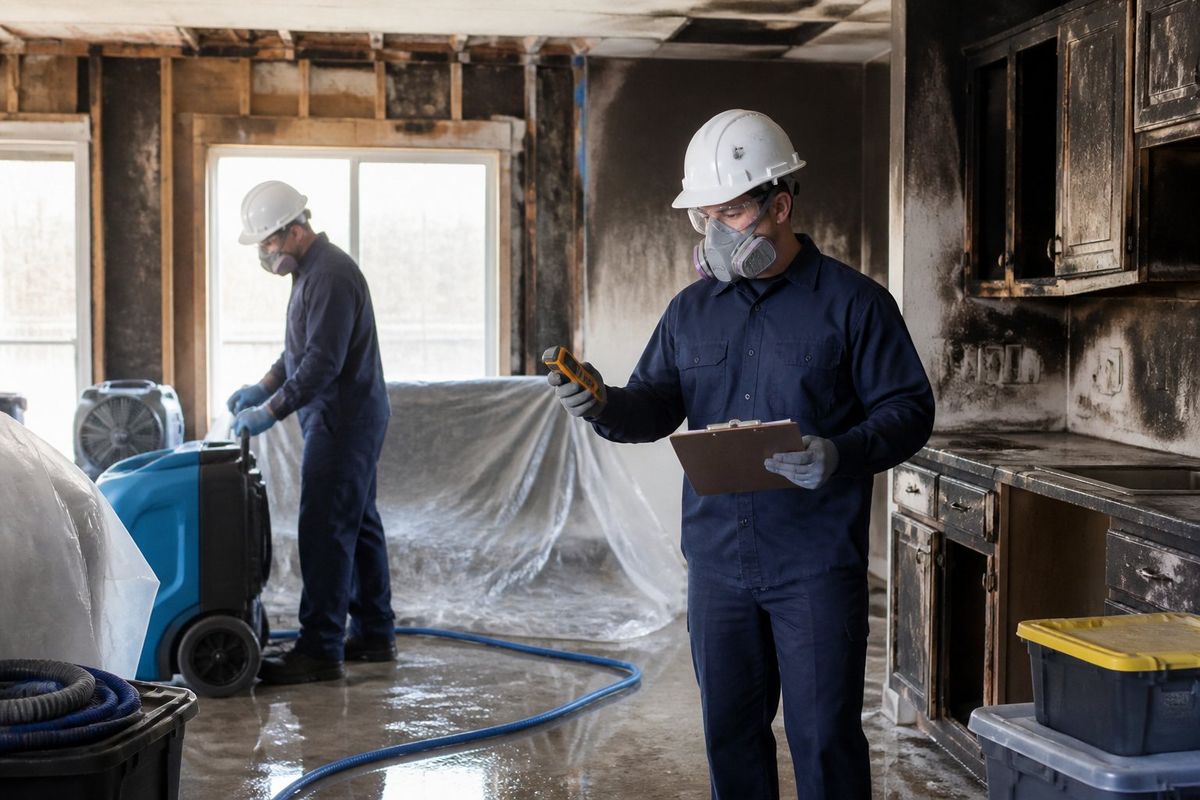
Before any reconstruction begins, the structure must be stabilized and dried. Water from fire suppression soaks into flooring, subflooring, and wall cavities. If that moisture is not addressed, mold can develop within 24 to 48 hours, creating a second major problem on top of the fire damage itself.
Debris removal and controlled demolition must also be completed. Charred materials cannot simply be built over. They must be removed down to a clean, solid structure before new materials are installed. This phase also makes the full extent of hidden damage visible for the first time.
Insurance Review and Scope Approval
Your insurance carrier needs to review the damage assessment and approve the scope of work before repairs begin. This protects you from paying out of pocket for work the carrier should cover, and it ensures the estimate aligns with your policy terms.
The review process involves your adjuster comparing the contractor's scope of work against standard repair costs in your area. Discrepancies may require negotiation or supplemental documentation.
Working with a contractor who understands this process reduces errors and delays at this stage, which is why homeowners often look specifically for restoration contractors with direct experience coordinating with insurance.
Permits and Code-Related Requirements
Most fire damage repairs require permits, particularly for structural, electrical, and plumbing work. In Prince George's County and Anne Arundel County, permit requirements apply to reconstruction work that affects load-bearing elements, mechanical systems, or the building envelope.
Pulling permits takes time, but skipping them creates serious liability. If unpermitted work is discovered during a future sale or appraisal, it can derail the transaction entirely. Permits also ensure that all repairs comply with current building codes, which may be more stringent than the standards used in the original construction.
Smoke Cleanup vs. Structural Repair
These two types of work are often confused, but they require different approaches, different materials, and different timing within the overall project.
Surface Residue and Odor Removal
Smoke cleanup focuses on surfaces, air quality, and odor. It includes wiping soot from walls, ceilings, and hard surfaces using specialized cleaning agents that neutralize acidic residue without spreading it further. HVAC systems must be cleaned or decontaminated to prevent smoke particles from recirculating throughout the home.
Odor removal is one of the most technically demanding parts of smoke cleanup. Smoke molecules bind to porous materials including drywall, insulation, wood framing, and soft furnishings. Effective deodorization typically involves a combination of air scrubbing, thermal fogging, and in some cases, ozone treatment applied by trained professionals in a vacated space.
Materials That Need Repair or Replacement
Structural fire damage repair involves replacing materials that flames, heat, or water have compromised past the point of cleaning. Common materials that require replacement after a fire include:
Charred or heat-damaged framing lumber
Burned or warped drywall and insulation
Fire-damaged roofing decking and sheathing
Flooring and subflooring saturated by fire suppression water
Electrical wiring or panels exposed to heat or flame
Cabinets, trim, and finishes in the fire zone
The distinction matters for your insurance claim as well. Smoke cleanup and structural repair are typically line-itemed separately in a restoration estimate. Understanding both categories helps you review your estimate and ask informed questions before work begins.
How the Restoration Process Usually Unfolds
Knowing the typical sequence helps you stay oriented and reduces the anxiety of not knowing what comes next.
First Call and On-Site Inspection
The process starts with a phone call to a restoration contractor. A reputable team will schedule an on-site inspection quickly, often within 24 hours of your call. During that visit, the contractor walks the property, identifies immediate safety concerns, and begins the documentation process that will support your insurance claim.
This first visit is also your opportunity to ask questions. You should feel like the contractor is informing you, not rushing you. A good assessment takes time.
Planning, Estimating, and Insurance Coordination
After the inspection, the contractor prepares a detailed scope of work and cost estimate. This document is submitted to your insurance carrier as part of the claims process. Back-and-forth between the contractor and adjuster is normal and often necessary to reach an approved scope that fully covers the required repairs.
This phase can take anywhere from a few days to a few weeks, depending on the size of the loss and your carrier's review timeline. A contractor with direct insurance coordination experience moves this phase forward more efficiently by speaking the same language as adjusters and providing documentation in the format carriers expect.
Repair, Rebuild, and Final Walkthrough
Once the scope is approved and permits are in place, physical repair work begins in a deliberate sequence: structural work first, mechanical systems next, then insulation, drywall, and finishes. Each phase is inspected before the next begins.
The final walkthrough is your chance to review every repaired area with the contractor before the project is closed out. A thorough team will not consider the job complete until you are satisfied with both the work and the documentation provided to your carrier.
Taking the Next Step With Confidence
You do not have to understand every detail of the restoration process to take the right next step. You just need to know the right questions to ask.
Questions to Ask Before Authorizing Work
Before you sign anything with a restoration contractor, ask the following:
Do you handle insurance coordination directly, or should I manage it myself?
Will you pull all required permits for the structural and mechanical repairs?
How do you document smoke and water spread for the insurance estimate?
What does your process look like for hidden damage found during demolition?
How will you keep me informed during the repair phase?
These questions help you evaluate whether a contractor has the experience and process to manage a fire damage project from start to finish, not just the visible repairs.
When to Schedule a Local Assessment
Schedule an assessment as soon as the property is cleared for entry. Every day of delay allows soot to etch deeper into surfaces, moisture to travel further into building materials, and potential mold growth to advance. Waiting even a few days can meaningfully increase the scope and cost of restoration.
If you are in Southern Maryland and unsure whether the damage qualifies as a full restoration project or a simple repair, an on-site inspection will give you a clear answer without any obligation. The earlier you get eyes on the damage, the better the outcome tends to be.
Frequently Asked Questions
What Should I Do First in the First 24 Hours After a House Fire to Protect My Home and My Family?
Confirm the property is safe to enter, then document all visible damage with photos and video before anything is moved or cleaned. Call your insurance carrier the same day to open your claim and ask about next steps.
How Does a Restoration Crew Remove Smoke Odor and Soot Without Spreading It Through the House?
Professionals use specialized cleaning agents to neutralize acidic soot residue and air-scrubbing equipment to filter smoke particles from the air. HVAC systems are decontaminated to prevent recirculation, and thermal fogging or ozone treatment may be used to remove deep odors in porous materials.
What Is the Typical Step-by-Step Process From Emergency Board-Up to Final Rebuild and Finishing Work?
The process moves from emergency stabilization and documentation, through damage assessment and insurance scope approval, into structural demolition and drying, and finally into permitted reconstruction and finish work. Each phase must be completed and inspected before the next begins.
How Much Does Fire and Smoke Cleanup Usually Cost, and What Factors Make the Price Go Up or Down?
Cost depends on the size of the fire zone, how far smoke and water traveled through the structure, whether structural repairs are needed, and the extent of contents damage. A detailed on-site assessment is the only reliable way to estimate the true scope of a specific loss.
What Items Usually Need to Be Thrown Away After Smoke Exposure, and What Can Often Be Cleaned and Saved?
Porous soft goods like mattresses, heavily contaminated insulation, and charred structural materials typically cannot be restored. Hard surfaces, sealed materials, and many personal items can often be professionally cleaned and deodorized if addressed quickly.
How Do I Choose a Trusted Local Company in Southern Maryland for Quality Craftsmanship and Peace of Mind?
Look for a locally owned contractor with direct fire restoration experience, the ability to coordinate your insurance claim, and a track record of permitted structural work in your county. Ask specifically about their process for documenting hidden damage and managing the adjuster review.
Taking the First Step Toward Restoring Your Home
A house fire leaves you with a lot of uncertainty. Knowing what the restoration process actually involves, from the first assessment through permitted reconstruction, gives you a foundation to move forward with confidence rather than anxiety.
The most important thing you can do right now is to schedule a professional inspection before more time passes. Documentation, drying, and stabilization all need to happen quickly, and the sooner an experienced team has eyes on your home, the more options you have.
Jenkins Restoration and Remodel serves homeowners across Southern Maryland, including Prince George's County and Anne Arundel County, with more than 50 years of experience in fire and water damage restoration. The team handles the insurance coordination directly, so you are not navigating that process alone.
Call today to schedule your assessment and get a clear plan before any work begins.